Mostrar mensagens com a etiqueta Freddie Hubbard. Mostrar todas as mensagens

sábado, 11 de fevereiro de 2012

George Benson - The Other Side of Abbey Road (1970)

Just three weeks after the U.S. release of the Beatles' swan song, Abbey Road, Creed Taylor ushered George Benson into the studio to begin a remarkably successful pop-jazz translation of the record (complete with a parody of the famous cover, showing Benson with guitar crossing an Eastern urban street). It is a lyrical album, with a hint of the mystery and a lot of the cohesive concept of the Beatles' original despite the scrambled order of the tunes. Benson is given some room to stretch out on guitar, sometimes in a bluesy groove, and there are more samples of his honeyed vocals than ever before (oddly, his voice would not be heard again by record-buyers until he signed with Warner Bros.). Don Sebesky's arrangements roam freely from baroque strings to a full-throated big band, and Freddie Hubbard, Sonny Fortune, and Hubert Laws get some worthy solo space. Yet for all its diversity, the record fits together as a whole more tightly than any other George Benson project, thanks to his versatile talents and the miraculous overarching unity of the Beatles' songs. One wonders if the Fab Four liked it, too.
By Richard S. Ginell in All Music Guide

Style:
Crossover-Jazz
Jazz Pop
Guitar Jazz

Tracks:
01 - Golden Slumbers/ You Never Give Me Your Money (04:48)
02 - Because / Come Together (07:23)
03 - Oh! Darling (03:59)
04 - Here Comes the Sun / I Want You (She's So Heavy) (09:02)
05 - Something / Octopus's Garden / The End (06:23)

Line-up:
George Benson – guitar, vocal
Herbie Hancock - piano, organ, harpsichord
Ernie Hayes - piano
Bob James - piano
Ron Carter - Bass guitar
Gerry Jemmott - Bass guitar
Idris Muhammad - drums
Ed Shaughnessy - drums
Ray Barretto - percussion
Andy Gonzalez - percussion
Wayne Andre - trombone, euphonium
Don Ashworth - baritone saxophone
Sonny Fortune - alto saxophone
Jerome Richardson - tenor saxophone, clarinet, flute
Mel Davis - trumpet, flugelhorn
Bernie Glow - trumpet
Freddie Hubbard - trumpet
Marvin Stamm - trumpet
Phil Bodner - flute, oboe
Hubert Laws - flute
Raoul Poliakin - violin
Max Pollikoff - violin
George Ricci - cello
Emanuel Vardi - viola

quinta-feira, 3 de fevereiro de 2011

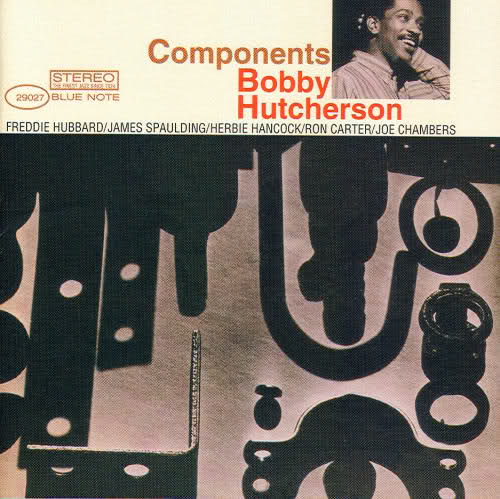
Bobby Hutcherson - Components (1965)

Perhaps the single album that best sums up Bobby Hutcherson's early musical personality, Components is appropriately split into two very distinct halves. The first features four Hutcherson originals in a melodic but still advanced hard bop style, while the latter half has four free-leaning avant-garde pieces by drummer Joe Chambers. Hutcherson allots himself more solo space than on Dialogue, but that's no knock on the excellent supporting cast, which includes Herbie Hancock on piano, James Spaulding on alto sax and flute, Freddie Hubbard on trumpet, and Ron Carter on bass. It's just more Hutcherson's date, and he helps unite the disparate halves with a cool-toned control that's apparent regardless of whether the material is way outside or more conventionally swinging. In the latter case, Hutcherson's originals are fairly diverse, encompassing rhythmically complex hard bop (the title track), pensive balladry ("Tranquillity," which features a lovely solo by Hancock), down-and-dirty swing ("West 22nd Street Theme"), and the gaily innocent "Little B's Poem," which went on to become one of Hutcherson's signature tunes and contains some lyrical flute work from Spaulding. The Chambers pieces tend to be deliberate explorations that emphasize texture and group interaction in the manner of Dialogue, except that there's even more freedom in terms of both structure and tonal center. (The exception is the brief but beautiful closing number, "Pastoral," an accurate title if ever there was one.) Components illustrated that Hutcherson was not only the most adventurous vibes player on the scene, but that he was also capable of playing more straightforward music with intelligence and feeling.
by Steve Huey in All Music Guide

Styles:
Modal
Post-Bop

Tracks:
01 - Components (06:23)
02 - Tranquility (05:01)
03 - Little B's Poem (05:08)
04 - West 22nd Street Theme (04:42)
05 - Movement (07:29)
06 - Juba Dance (05:21)
07 - Air (04:45)
08 - Pastoral (02:02)

Line-up:
Bobby Hutcherson: vibraphone
Joe Chambers: drums
Herbie Hancock: piano
James Spaulding: alto saxophone, flute
Freddie Hubbard: trumpet
Ron Carter: bass

quinta-feira, 13 de janeiro de 2011

Freddie Hubbard & Leon Thomas - A Night in Tunisia (1979)


Line-up:
Freddie Hubbard - Trumpet
Leon Thomas - Vocals, Percurssion
Hadley Caliman - Tenor Saxophone
Billy Childs - Piano
Larry Klein - Bass
Carl Burnett - Drums

sexta-feira, 12 de novembro de 2010

Freddie Hubbard - First Light (1971)

Never one to take lyricism for granted, trumpeter and composer Freddie Hubbard entered Creed Taylor's studio for the third time in 1971 with the express purpose of making a record radically different from anything he'd cut before; he was looking for it to use electricity and to be out of the soul-jazz mold, but was also more ambitious and wanted to push that envelope and himself. Taylor and Hubbard assembled a band that included Herbie Hancock on Rhodes, guitarists Eric Gale and George Benson, bassist Ron Carter, Jack DeJohnette on drums, Airto Moreira on percussion, and Richard Wyands on acoustic piano to back him. The band was also supported by the truly ethereal and adventurous string arrangements of Don Sebesky (a first for Hubbard). The result is a masterpiece of textured sound, gorgeously far-flung charts, sweet, tight grooves, a subtle mystic feel, and some of Hubbard's most exciting playing ever. The title track and Hubbard's ingenious read of Paul and Linda McCartney's "Uncle Albert/ Admiral Halsey," as well as Leonard Bernstein's "Lonely Town," are so in the pocket that they bleed soul. Benson's uncharacteristically edgy guitar playing juxtaposed against Hubbard's warm tone, and Hancock's beautifully modal Rhodes lines that are drenched with big, open, minor chord voicings, are simply made more illustrious and graceful by Sebesky's strings. While Red Clay and Straight Life are both fine albums, First Light is the one that connects on all levels -- and it did with the jazz-buying public as well. A masterpiece.
by Thom Jurek in All Music Guide

Style:
Fusion

Tracks:
01 First Light (11:05)
02 Uncle Albert/Admiral Halsey (8:17)
03 Moment to Moment (5:43)
04 Yesterday's Dreams (3:55)
05 Lonely Town [from On the Town] (7:00)
06 Fantasy in D (6:55)
07 First Light [alternate take] (16:04)

Line-up:
Freddie Hubbard - trumpet
Joe Henderson - tenor saxophone
Herbie Hancock - Fender Rhodes piano
Richard Wyands - piano
Ron Carter - bass
Jack DeJohnette - drums
Eric Gale - guitar
George Benson - guitar
Airto Moreira - percussion
Don Sebesky - string arrangements

quarta-feira, 3 de novembro de 2010

Bobby Hutcherson - Dialogue (1965)

Coming fresh on the heels of his groundbreaking work with Eric Dolphy, Bobby Hutcherson's debut album is a masterpiece of "new thing" avant-garde jazz, not really free but way beyond standard hard bop. Dialogue boasts an all-star lineup of hot young post-boppers -- trumpeter Freddie Hubbard, woodwind player Sam Rivers, pianist Andrew Hill, bassist Richard Davis, and drummer Joe Chambers -- and a set of imaginative compositions by either Hill or Chambers that frequently push the ensemble into uncharted territory. The result is an album bursting at the seams with ideas that still sound remarkably fresh, not to mention a strong sense of collectivity. Hutcherson has so many fine players on hand that the focus is naturally on group interaction rather than any particular soloist(s), setting up nice contrasts like the fiery sax work of Rivers versus the cooler tones of Hutcherson and Hill. Hill's pieces stand tradition on its head, twisting recognizable foundations like the blues ("Ghetto Lights"), Latin jazz ("Catta"), and marching bands ("Les Noirs Marchant," which sounds like a parade of mutant soldiers) into cerebral, angular shapes. Chambers, meanwhile, contributes the most loosely structured pieces in his delicate, softly mysterious ballad "Idle While" and the nearly free group conversations of the ten-minute title track, where Hutcherson also plays the more African-sounding marimba. What's impressive is how focused Hutcherson keeps the group through those widely varied sounds; no one is shortchanged, yet the solos are tight, with no wasted space or spotlight-hogging. Dialogue remains Hutcherson's most adventurous, "outside" album, and while there are more extensive showcases for his playing, this high-caliber session stands as arguably his greatest musical achievement.
by Steve Huey in All Music Guide

Styles:
Hard-Bop
Post-Bop

Tracks:
01 - Catta (07:19)
02 - Idle While (06:37)
03 - Les Noirs Marchant (06:41)
04 - Dialogue (09:59)
05 - Ghetto Lights (06:16)
06 - Jasper (08:29)

Line-up:
Bobby Hutcherson: vibraphone, marimba
Joe Chambers: drums
Andrew Hill: piano
Sam Rivers: woodwinds
Freddie Hubbard: trumpet
Richard Davis: bass

segunda-feira, 25 de outubro de 2010

Sonny Rollins - East Broadway Run Down (1966)

Around the ten-minute mark of the title track, things get very interesting indeed -- moody and spooky as Jimmy Garrison hangs on a single note, making his bass throb along while Elvin Jones widens the space and fires drum and cymbal hits in all directions. Coming off bass and drum solos that never seem to fit anywhere in the piece, it's a supreme moment of tension-building, one that gets repeated after Rollins and trumpeter Freddie Hubbard restate the theme in unison. This is the sound of Rollins' group working in unity. For much of "East Broadway Run Down," though, the rhythm section is off doing their thing, usually together, while Rollins meanders about in limbo, seemingly trying to figure out what it is that he should be doing. That Rollins was having an off day for this recording is a suspicion that's strengthened by Hubbard's part -- where Rollins is wandering, Hubbard is charging ahead, focused and tight, fitting with the rhythm section, keeping the tension up. The remainder of the album is more on the mark, with "Blessing in Disguise" being quite enjoyable -- it starts out in a cheerfully traditional vein and gradually, subtly, starts to slide off into an improvisational area only to come back again to the traditional, and so back and forth. Rollins floats his sax line around the melody with only occasional excursions toward the outer regions. "We Kiss in a Shadow," though, is charmingly straightforward, a ballad rendering supported by Jones and Garrison locking together on a nice rhythm construction that lets Rollins float around the melody.
by Steven McDonald in All Music Guide

Styles:
Post-bop
Avant-Garde
Hard-Bop

Tracks:
01 - East Broadway Run Down (20:27)
02 - Blessing in Disguise (12:27)
03 - We Kiss in a Shadow (5:40)

Line-up:
Sonny Rollins – sax (tenor)
Jimmy Garrison – bass
Freddie Hubbard – trumpet
Elvin Jones – drums

quarta-feira, 1 de setembro de 2010

Herbie Hancock - Maiden Voyage (1965)

Less overtly adventurous than its predecessor, Empyrean Isles, Maiden Voyage nevertheless finds Herbie Hancock at a creative peak. In fact, it's arguably his finest record of the '60s, reaching a perfect balance between accessible, lyrical jazz and chance-taking hard bop. By this point, the pianist had been with Miles Davis for two years, and it's clear that Miles' subdued yet challenging modal experiments had been fully integrated by Hancock. Not only that, but through Davis, Hancock became part of the exceptional rhythm section of bassist Ron Carter and drummer Tony Williams, who are both featured on Maiden Voyage, along with trumpeter Freddie Hubbard and tenor saxophonist George Coleman. The quintet plays a selection of five Hancock originals, many of which are simply superb showcases for the group's provocative, unpredictable solos, tonal textures, and harmonies. While the quintet takes risks, the music is lovely and accessible, thanks to Hancock's understated, melodic compositions and the tasteful group interplay. All of the elements blend together to make Maiden Voyage a shimmering, beautiful album that captures Hancock at his finest as a leader, soloist, and composer.
by Stephen Thomas Erlewine in All Music Guide

Styles:
Hard-Bop
Modal

Tracks:
01 - Maiden Voyage (7:53)
02 - The Eye of the Hurricane (5:57)
03 - Little One (8:43)
04 - Survival of the Fittest (9:59)
05 - Dolphin Dance (9:16)

Line-up:
Herbie Hancock — Piano
Freddie Hubbard — Trumpet
George Coleman — Tenor saxophone
Ron Carter — Bass
Tony Williams — drums

sábado, 28 de agosto de 2010

John Coltrane - Ascension (1965)

Ascension is the single recording that placed John Coltrane firmly into the avant-garde. Whereas, prior to 1965, Coltrane could be heard playing in an avant vein with stretched-out solos, atonality, and a seemingly free design to the beat, Ascension throws most rules right out the window with complete freedom from the groove and strikingly abrasive sheets of horn interplay. Recorded with three tenors (Trane, Pharoah Sanders, Archie Shepp), two altos (Marion Brown, John Tchicai), two trumpet players (Freddie Hubbard, Dewey Johnson), two bassists (Art Davis, Jimmy Garrison), the lone McCoy Tyner on piano, and Elvin Jones on the drums, this large group is both relentless and soulful simultaneously. While there are segments where the ensemble plays discordant and abrasive skronks, these are usually segues into intriguing blues-based solos from each member. The comparison that is immediately realized is Ornette Coleman's Free Jazz of five years previous. However, it should be known that Ascension certainly carries its own weight, and in a strange sense makes Coleman's foray a passive adventure -- mostly due to an updated sonic quality (à la Bob Thiele) and also Trane's greater sense of passionate spiritualism. Timed at around 40 minutes, this can be a difficult listen at first, but with a patient ear and an appreciation for the finer things in life, the reward is a greater understanding of the personal path that the artist was on at that particular time in his development. Coltrane was always on an unceasing mission for personal expansion through the mouthpiece of his horn, but by the time of this recording he had begun to reach the level of "elder statesman" and to find other voices (Shepp, Sanders, and Marion Brown) to propel and expand his sounds and emotions. Therefore, Ascension reflects more of an event rather than just a jazz record and should be sought out by either experienced jazz appreciators or other open-minded listeners, but not by unsuspecting bystanders.
by Sam Samuelson in All Music Guide

Styles:
Free-Jazz
Avant-Garde
Experimental Big-Band

Tracks:
01 - Ascension [Edition II] (40:56)
02 - Ascension [Edition I] (38:30)

Line-up:
John Coltrane – tenor saxophone
Pharoah Sanders – tenor saxophone
Archie Shepp – tenor saxophone
Marion Brown – alto saxophone
John Tchicai – alto saxophone
McCoy Tyner – piano
Freddie Hubbard – trumpet
Dewey Johnson – trumpet
Art Davis – upright bass
Jimmy Garrison – upright bass
Elvin Jones – drums

sexta-feira, 6 de agosto de 2010

Wayne Shorter - Speak no Evil (1965)

On his third date for Blue Note within a year, Wayne Shorter changed the bands that played on both Night Dreamer and Juju and came up with not only another winner, but also managed to give critics and jazz fans a different look at him as a saxophonist. Because of his previous associations with McCoy Tyner, Elvin Jones, and Reggie Workman on those recordings, Shorter had been unfairly branded with the "just-another-Coltrane-disciple" tag, despite his highly original and unusual compositions. Here, with only Jones remaining and his bandmates from the Miles Davis Quintet, Herbie Hancock and Ron Carter on board (with Freddie Hubbard filling out the horn section), Shorter at last came into his own and caused a major reappraisal of his earlier work. The odd harmonic frameworks used to erect "Fee-Fi-Fo-Fum," with its balladic structure augmented with a bluesy regimen of hard bop and open-toned modalism, create the illusion of a much larger band managing all that timbral space. Likewise on the title track, with its post-bop-oriented melodic line strewn across a wide chromatic palette of minors and Hancock's piano pushing through a contrapuntal set of semi-quavers, the avant-garde meets the hard bop of the '50s head on and everybody wins. The loping lyric of the horns and Hancock's vamping in the middle section during Shorter's solo reveals a broad sense of humor in the saxophonist's linguistics and a deep, more regimented sense of time and thematic coloration. The set ends with the beautiful "Wild Flower," a lilting ballad with angular accents by Hancock who takes the lyric and inverts it, finding a chromatic counterpoint that segues into the front line instead of playing in opposition. The swing is gentle but pronounced and full of Shorter's singular lyricism as a saxophonist as well as a composer. [The CD reissue adds a fine alternate take of "Dance Cadaverous."]
by Thom Jurek in All Music Guide

Styles:
Hard-Bop

Tracks:
01 - Witch Hunt (8:07)
02 - Fee-Fi-Fo-Fum (5:50)
03 - Dance Cadaverous (6:45)
04 - Speak No Evil (8:23)
05 - Infant Eyes (6:51)
06 - Wild Flower (6.00)
07 - Dance Cadaverous (alternate take) (6:35)

Line-up:
Wayne Shorter — tenor saxophone
Freddie Hubbard — trumpet
Herbie Hancock — piano
Ron Carter — bass
Elvin Jones — drums

segunda-feira, 7 de junho de 2010

John Coltrane - Olé Coltrane (1961)

The complicated rhythm patterns and diverse sonic textures on Olé are evidence that John Coltrane was once again charting his own course. His sheer ability as a maverick -- over and beyond his appreciable musical skills -- guides works such as this to new levels, ultimately advancing the entire art form. Historically, it's worth noting that recording had already commenced -- two days prior to this session -- on Africa/Brass, Coltrane's debut for the burgeoning Impulse! label. The two discs complement each other, suggesting a shift in the larger scheme of Coltrane's musical motifs. The assembled musicians worked within a basic quartet setting, featuring Coltrane (soprano/tenor sax), McCoy Tyner (piano), and Elvin Jones (drums), with double-bass chores held down by Art Davis and Reggie Workman. Added to that are significant contributions and interactions with Freddie Hubbard (trumpet) and Eric Dolphy (flute and alto sax). Dolphy's contract with another record label prevented him from being properly credited on initial pressings of the album. The title track is striking in its resemblance to the Spanish influence heard on Miles Davis' Sketches of Spain. This is taken a bit further as Coltrane's combo stretches out with inspired improvisations from Dolphy, Hubbard, Tyner, and Coltrane, respectively. "Olé" likewise sports some amazing double-bass interaction. The combination of a bowed upright bass played in tandem with the same instrument that is being plucked has a sinister permeation that assuredly excited Coltrane, who was perpetually searching from outside the norms. The haunting beauty of "Aisha" stands as one of the finest collaborative efforts between Tyner -- the song's author -- and Coltrane. The solos from Hubbard, Dolphy, and an uncredited Tyner gleam from within the context of a single facet in a multi-dimensional jewel. The CD reissue also includes an extra track cut during the Olé sessions. "To Her Ladyship" is likewise on the seven-volume Heavyweight Champion: The Complete Atlantic Recordings box set.
by Lindsay Planer in All Music Guide

Styles:
Modal
Hard Bop
Post Bop

Tracks:
01 - Olé (18:15)
02 - Dahomey Dance (10:52)
03 - Aisha (7:39)
04 - To Her Ladyship [Bonus Track] (8:58)

Line up:
John Coltrane – soprano sax, tenor sax
Eric Dolphy – flute, alto sax
Freddie Hubbard – trumpet
McCoy Tyner – piano
Reggie Workman – bass
Art Davis – bass
Elvin Jones – drums

terça-feira, 27 de abril de 2010

Eric Dolphy - Out to Lunch (1964)

Out to Lunch stands as Eric Dolphy's magnum opus, an absolute pinnacle of avant-garde jazz in any form or era. Its rhythmic complexity was perhaps unrivaled since Dave Brubeck's Time Out, and its five Dolphy originals -- the jarring Monk tribute "Hat and Beard," the aptly titled "Something Sweet, Something Tender," the weirdly jaunty flute showcase "Gazzelloni," the militaristic title track, the drunken lurch of "Straight Up and Down" -- were a perfect balance of structured frameworks, carefully calibrated timbres, and generous individual freedom. Much has been written about Dolphy's odd time signatures, wide-interval leaps, and flirtations with atonality. And those preoccupations reach their peak on Out to Lunch, which is less rooted in bop tradition than anything Dolphy had ever done. But that sort of analytical description simply doesn't do justice to the utterly alien effect of the album's jagged soundscapes. Dolphy uses those pet devices for their evocative power and unnerving hints of dementia, not some abstract intellectual exercise. His solos and themes aren't just angular and dissonant -- they're hugely so, with a definite playfulness that becomes more apparent with every listen. The whole ensemble -- trumpeter Freddie Hubbard, vibist Bobby Hutcherson, bassist Richard Davis, and drummer Tony Williams -- takes full advantage of the freedom Dolphy offers, but special mention has to be made of Hutcherson, who has fully perfected his pianoless accompaniment technique. His creepy, floating chords and quick stabs of dissonance anchor the album's texture, and he punctuates the soloists' lines at the least expected times, suggesting completely different pulses. Meanwhile, Dolphy's stuttering vocal-like effects and oddly placed pauses often make his bass clarinet lines sound like they're tripping over themselves. Just as the title Out to Lunch suggests, this is music that sounds like nothing so much as a mad gleam in its creator's eyes.
by Steve Huey in All Music Guide

Styles:
Post-bop
Avant-Garde

Tracks:
01 - Hat and Beard (8:28)
02 - Something Sweet, Something Tender (6:06)
03 - Gazzelloni (7:24)
04 - Out to Lunch (12:10)
05 - Straight Up and Down (8:21)Line-up:
Eric Dolphy - alto saxophone, flute, bass clarinet
Freddie Hubbard - trumpet
Bobby Hutcherson - vibraphone
Richard Davis - bass
Tony Williams - drums

terça-feira, 13 de abril de 2010

Ornette Coleman - Free Jazz: A Colective Improvisation (1960)

The original cover of "Free Jazz" (1960) featured a reproduction of one of Jackson Pollock's drip paintings, "White Light." The reference is an apt one--like Pollock, Ornette has always had faith that out of chaos, intuition and freedom, beauty will emerge. For the recording session of "Free Jazz," Ornette brought with him two quartets (each with bass drums, and two horns) and had them play simultaneously, giving them only a few very vague directions.
What emerged was, like a Pollock painting, a thing of primal beauty and power, formally strange and surprisingly dance-like. It is also (like a Pollock) better experienced than described.
Each quartet occupies their own stereo channel (Ornette, Don Cherry, Scott LaFaro and Billy Higgins are on the left channel; and Eric Dolphy, Freddie Hubbard, Charlie Haden and Ed Blackwell are on the right). The music that comes out of the speakers is much more than an experiment; it's also much more than just the collective sound of all these wonderful musicians. It's an ecstatic work that has been an inspiration to creative musicians for over 40 years, and it will continue to be for many years to come.

Styles:
Avant-Garde
Free-Jazz

Tracks:
01 - Free Jazz (37:10)
02 - First Take (17:02)

Line-up:
Ornette Coleman – alto saxophone
Don Cherry – pocket trumpet
Scott LaFaro – bass
Billy Higgins – drums
Eric Dolphy – bass clarinet
Freddie Hubbard – trumpet
Charlie Haden – bass
Ed Blackwell – drums

segunda-feira, 22 de março de 2010

Freddie Hubbard - Ready for Freddie (1961)

Trumpeter Freddie Hubbard really came into his own during this Blue Note session. He is matched with quite an all-star group (tenor saxophonist Wayne Shorter, pianist McCoy Tyner, bassist Art Davis, and drummer Elvin Jones in addition to Bernard McKinney on euphonium), introduces two of his finest compositions ("Birdlike" and "Crisis"), and is quite lyrical on his ballad feature, "Weaver of Dreams." Hubbard's sidemen all play up to par and this memorable session is highly recommended; it's one of the trumpeter's most rewarding Blue Note albums.
by Scott Yanow at All Music Guide

Style:
Hard Bop

Tracks:
01 Arietis
02 A Weaver of Dreams
03 Marie Antoinette
04 Birdlike
05 Crisis

Line-up:

Freddie Hubbard - trumpet / horn
McCoy Tyner - piano
Art Davis - bass
Elvin Jones - drums
Bernard McKinney - Euphonium / horn
Wayne Shorter - tenor saxophone

sexta-feira, 7 de agosto de 2009

Herbie Hancock - Empyrean Isles (1964)

My Point of View and Inventions and Dimensions found Herbie Hancock exploring the fringes of hard bop, working with a big band and a Latin-flavored percussion section, respectively. On Empyrean Isles, he returns to hard bop, but the results are anything but conventional. Working with cornetist Freddie Hubbard, bassist Ron Carter, and drummer Tony Williams -- a trio just as young and adventurous as he was -- Hancock pushes at the borders of hard bop, finding a brilliantly evocative balance between traditional bop, soul-injected grooves, and experimental, post-modal jazz. Hancock's four original concepts are loosely based on the myths of the Empyrean Isles, and they are designed to push the limits of the band and of hard bop. Even "Cantaloupe Island," well-known for its funky piano riff, takes chances and doesn't just ride the groove. "The Egg," with its minimal melody and extended solo improvisations, is the riskiest number on the record, but it works because each musician spins inventive, challenging solos that defy convention. In comparison, "One Finger Snap" and "Oliloqui Valley" (alternate takes of both tracks are included as bonuses on the CD reissue) adhere to hard bop conventions, but each song finds the quartet vigorously searching for new sonic territory with convincing fire. That passion informs all of Empyrean Isles, a record that officially established Hancock as a major artist in his own right.
by Stephen Thomas Erlewine at All Music Guide.

Styles:

Modal Music
Hard Bop

Tracks:
01 One Finger Snap
02 Oliloqui Valley
03 Cantaloupe Island
04 The Egg
05 One Finger Snap (alternate take)
06 Oliloqui Valley (alternate take)


Line-up:

Herbie Hancock - piano
Freddie Hubbard - cornet / flugelhorn
Ron Carter - bass
Tony Williams - drums

domingo, 12 de julho de 2009

Oliver Nelson - The Blues and the Abstract Truth (1961)

As Oliver Nelson is known primarily as a big band leader and arranger, he is lesser known as a saxophonist and organizer of small ensembles. Blues and the Abstract Truth is his triumph as a musician for the aspects of not only defining the sound of an era with his all-time classic "Stolen Moments," but on this recording, assembling one of the most potent modern jazz sextets ever. Lead trumpeter Freddie Hubbard is at his peak of performance, while alto saxophonists Nelson and Eric Dolphy (Nelson doubling on tenor) team to form an unlikely union that was simmered to perfection. Bill Evans (piano), Paul Chambers (bass), and Roy Haynes (drums) can do no wrong as a rhythm section. "Stolen Moments" really needs no comments, as its undisputable beauty shines through in a three-part horn harmony fronting Hubbard's lead melody. It's a thing of beauty that is more timeless as the years pass. The "Blues" aspect is best heard on "Yearnin'," a stylish, swinging, and swaying downhearted piece that is a bluesy as Evans would ever be. Both "Blues" and "Abstract Truth" combine for the darker "Teenie's Blues," a feature for Nelson and Dolphy's alto saxes, Dolphy assertive in stepping forth with his distinctive, angular, dramatic, fractured, brittle voice that marks him a maverick. Then there's "Hoedown," which has always been the black sheep of this collection with its country flavor and stereo separated upper and lower horn in snappy call-and-response barking. As surging and searing hard boppers respectively, "Cascades" and "Butch & Butch" again remind you of the era of the early '60s when this music was king, and why Hubbard was so revered as a young master of the idiom. This CD is a must buy for all jazz collectors, and a Top Ten-Fifty favorite for many.
by Michael G. Nastos at All Music Guide.

Styles:

Post-Bop
Hard Bop
Progressive Jazz

Tracks:

01 Stolen Moments
02 Hoe-Down
03 Cascades
04 Yearin'
05 Butch and Butch
06 Teenie's Blues

Line-up:

George Barrow - baritone saxophone
Paul Chambers - bass
Eric Dolphy - flute / alto saxophone
Bill Evans - piano
Roy Haynes - drums
Freddie Hubbard - trumpet
Oliver Nelson - alto and tenor saxophone

sábado, 11 de julho de 2009

Freddie Hubbard - Red Clay (1970)

This may be Freddie Hubbard's finest moment as a leader, in that it embodies and utilizes all of his strengths as a composer, soloist, and frontman. On Red Clay, Hubbard combines hard bop's glorious blues-out past with the soulful innovations of mainstream jazz in the 1960s, and reads them through the chunky groove innovations of 1970s jazz fusion. This session places the trumpeter in the company of giants such as tenor saxophonist Joe Henderson, pianist Herbie Hancock, bassist Ron Carter, and drummer Lenny White. Hubbard's five compositions all come from deep inside blues territory; these shaded notions are grafted onto funky hard bop melodies worthy of Horace Silver's finest tunes, and are layered inside the smoothed-over cadences of shimmering, steaming soul. The 12-minute-plus title track features a 4/4 modal opening and a spare electric piano solo woven through the twin horns of Hubbard and Henderson. It is a fine example of snaky groove music. Henderson even takes his solo outside a bit without ever moving out of the rhythmnatist's pocket. "Delightful" begins as a ballad with slow, clipped trumpet lines against a major key background, and opens onto a mid-tempo groover, then winds back into the dark, steamy heart of bluesy melodicism. The hands-down favorite here, though, is "The Intrepid Fox," with its Miles-like opening of knotty changes and shifting modes, that are all rooted in bop's muscular architecture. It's White and Hancock who shift the track from underneath with large sevenths and triple-timed drums that land deeply inside the clamoring, ever-present riff. Where Hubbard and Henderson are playing against, as well as with one another, the rhythm section, lifted buoyantly by Carter's bridge-building bassline, carries the melody over until Hancock plays an uncharacteristically angular solo before splitting the groove in two and doubling back with a series of striking arpeggiatics. This is a classic, hands down.
by Thom Jurek at All Music Guide.

Styles:
Soul-Jazz
Post-Bop
Jazz-Funk

Tracks:

01 Red Clay
02 Delphia
03 Suite Sioux
04 The Interprid Fox
05 Cold Turquey
06 Red Clay (live version)

Line-up:
Freddie Hubbard - trumpet / horn
Joe Henderson - tenor saxophone
Herbie Hancock - piano
Ron Carter - bass
Lenny White - drums

Red Clay live version:
Freddie Hubbard - trumpet
George Benson - guitar
Stanley Turrentine - tenor saxophone
Johnny Hammond - organ / electric piano
Ron Carter - bass
Billy Cobham - drums
Airto Moreira - percussion

sexta-feira, 16 de janeiro de 2009