Mostrar mensagens com a etiqueta Herbie Hancock. Mostrar todas as mensagens

domingo, 17 de junho de 2012

Joe Henderson - Power to the People (1969)

The late sixties were an exciting time for jazz, although not a lucrative one. Faced with a declining market share due to the popularity of rock music, jazz musicians were forced to find an audience by pursuing new avenues in composition and instrumentation.
Joe Henderson, a much beloved player for the Blue Note label was dropped in the late sixties. Orrin Keepnews, who certainly could recognize great talent when he saw it, signed him to his newly formed Milestone label. This 1969 release finds Henderson with a near perfect rhythm section. It features imaginative compositions that easily make it a highlight of the accomplished musician's career.
Power to the People is an appropriate title for a session filled with the sense of urgency and charisma found here. Henderson took a page from the compositional methods of the Miles Davis quintet from a few years back in that many of the compositions feature the same dark corners and ambiguous chord structures of that famous group. Only "Incognito" harkens back to an earlier time in Henderson's career.
Henderson has, for the most part, abandoned the harsh tone of his earlier releases for a more smoothed over sound, giving up nothing in confidence. Herbie Hancock and Ron Carter are session musicians here, featured both on acoustic and electric instruments.
Jack DeJohnette, another master who would contribute heavily to Miles' electric period, provides skilled drumming in the background. As an added bonus, two selections feature Mike Lawrence, a promising trumpeter who died in 1983.
As part of the Keepnews Collection, the sound on this release is superb. Carter is served especially well—every note is clearly heard. Hancock's electric piano, at times both burbling in the background and providing an acid sting, is also crisp.
While signed to the Blue Note label, Henderson provided seminal releases in the accepted format. On many levels, Power to the People is more satisfying, a neglected gem that showcases an artist reaching for all that he can accomplish. 
By David Rickert in All About Jazz

Styles:
Post-Bop
Fusion

Tracks:
01 - Black Narcissus (04:52)
02 - Afro-Centric (07:05)
03 - Opus One-Point-Five (04:56)
04 - Isotope (04:56)
05 - Power To The People (08:45)
06 - Lazy Afternoon (04:36)
07 - Foresight and Afterthought (07:33)

Line-up:
Joe Henderson - tenor saxophone
Mike Lawrence - trumpet
Herbie Hancock - piano, electric piano
Ron Carter - bass instrument, electric bass
Jack DeJohnette - drum

sábado, 11 de fevereiro de 2012

George Benson - The Other Side of Abbey Road (1970)

Just three weeks after the U.S. release of the Beatles' swan song, Abbey Road, Creed Taylor ushered George Benson into the studio to begin a remarkably successful pop-jazz translation of the record (complete with a parody of the famous cover, showing Benson with guitar crossing an Eastern urban street). It is a lyrical album, with a hint of the mystery and a lot of the cohesive concept of the Beatles' original despite the scrambled order of the tunes. Benson is given some room to stretch out on guitar, sometimes in a bluesy groove, and there are more samples of his honeyed vocals than ever before (oddly, his voice would not be heard again by record-buyers until he signed with Warner Bros.). Don Sebesky's arrangements roam freely from baroque strings to a full-throated big band, and Freddie Hubbard, Sonny Fortune, and Hubert Laws get some worthy solo space. Yet for all its diversity, the record fits together as a whole more tightly than any other George Benson project, thanks to his versatile talents and the miraculous overarching unity of the Beatles' songs. One wonders if the Fab Four liked it, too.
By Richard S. Ginell in All Music Guide

Style:
Crossover-Jazz
Jazz Pop
Guitar Jazz

Tracks:
01 - Golden Slumbers/ You Never Give Me Your Money (04:48)
02 - Because / Come Together (07:23)
03 - Oh! Darling (03:59)
04 - Here Comes the Sun / I Want You (She's So Heavy) (09:02)
05 - Something / Octopus's Garden / The End (06:23)

Line-up:
George Benson – guitar, vocal
Herbie Hancock - piano, organ, harpsichord
Ernie Hayes - piano
Bob James - piano
Ron Carter - Bass guitar
Gerry Jemmott - Bass guitar
Idris Muhammad - drums
Ed Shaughnessy - drums
Ray Barretto - percussion
Andy Gonzalez - percussion
Wayne Andre - trombone, euphonium
Don Ashworth - baritone saxophone
Sonny Fortune - alto saxophone
Jerome Richardson - tenor saxophone, clarinet, flute
Mel Davis - trumpet, flugelhorn
Bernie Glow - trumpet
Freddie Hubbard - trumpet
Marvin Stamm - trumpet
Phil Bodner - flute, oboe
Hubert Laws - flute
Raoul Poliakin - violin
Max Pollikoff - violin
George Ricci - cello
Emanuel Vardi - viola

terça-feira, 30 de agosto de 2011

Norman Connors - Dance of Magic (1972)

Recorded with a who's who of fusion titans including trumpeter Eddie Henderson, bassist Stanley Clarke, and keyboardist Herbie Hancock, Dance of Magic channels the lessons drummer Norman Connors learned in the employ of Pharoah Sanders, Sam Rivers, and Sun Ra, marshaling Latin rhythms, electronic textures, and cosmic mysticism to create nondenominational yet deeply spiritual funk-jazz. The sprawling 21-minute title cut spans the entirety of the record's first half, capturing a monumental jam session that explores the outer edges of free improvisation but never steps past the point of no return. Connors' furious drumming is like a trail of bread crumbs that leads his collaborators back home. The remaining three tracks are smaller in scale but no less epic in scope, culminating with the blistering "Give the Drummer Some."
By Jason Ankenny in All Music

Styles:
Fusion
Crossover
Funk-Jazz
Avant-Garde

Tracks:
01 - Dance Of Magic (21:00)
02 - Morning Change (06:29)
03 - Blue (10:20)
04 - Give The Drummer Some (02:22)

Line-up:
Norman Connors - Drums
Stanley Clarke - Bass
Cecil McBee - Bass
Herbie Hancock - Piano, Fender Rhodes, Electric Piano
Gary Bartz - Alto & Soprano Saxophones
Carlos Garnett - Tenor & Soprano, Saxophones
Art Webb - Flute
Eddie Henderson - Trumpet
Anthony Wiles - Baliphone
Airto Moreira - Percussion
Alphonse Mouzon - Percussion
Anthony Wiles - Percussion
Billy Hart - Percussion

quinta-feira, 3 de fevereiro de 2011

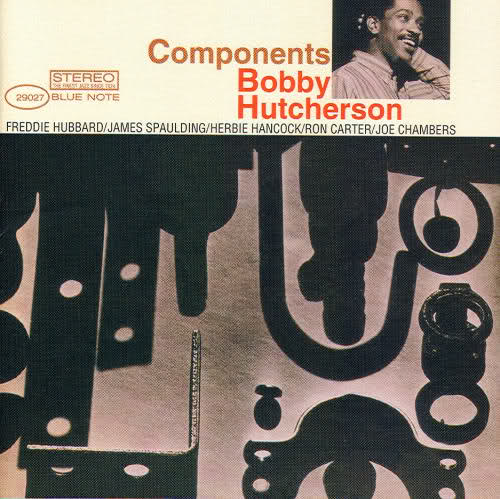
Bobby Hutcherson - Components (1965)

Perhaps the single album that best sums up Bobby Hutcherson's early musical personality, Components is appropriately split into two very distinct halves. The first features four Hutcherson originals in a melodic but still advanced hard bop style, while the latter half has four free-leaning avant-garde pieces by drummer Joe Chambers. Hutcherson allots himself more solo space than on Dialogue, but that's no knock on the excellent supporting cast, which includes Herbie Hancock on piano, James Spaulding on alto sax and flute, Freddie Hubbard on trumpet, and Ron Carter on bass. It's just more Hutcherson's date, and he helps unite the disparate halves with a cool-toned control that's apparent regardless of whether the material is way outside or more conventionally swinging. In the latter case, Hutcherson's originals are fairly diverse, encompassing rhythmically complex hard bop (the title track), pensive balladry ("Tranquillity," which features a lovely solo by Hancock), down-and-dirty swing ("West 22nd Street Theme"), and the gaily innocent "Little B's Poem," which went on to become one of Hutcherson's signature tunes and contains some lyrical flute work from Spaulding. The Chambers pieces tend to be deliberate explorations that emphasize texture and group interaction in the manner of Dialogue, except that there's even more freedom in terms of both structure and tonal center. (The exception is the brief but beautiful closing number, "Pastoral," an accurate title if ever there was one.) Components illustrated that Hutcherson was not only the most adventurous vibes player on the scene, but that he was also capable of playing more straightforward music with intelligence and feeling.
by Steve Huey in All Music Guide

Styles:
Modal
Post-Bop

Tracks:
01 - Components (06:23)
02 - Tranquility (05:01)
03 - Little B's Poem (05:08)
04 - West 22nd Street Theme (04:42)
05 - Movement (07:29)
06 - Juba Dance (05:21)
07 - Air (04:45)
08 - Pastoral (02:02)

Line-up:
Bobby Hutcherson: vibraphone
Joe Chambers: drums
Herbie Hancock: piano
James Spaulding: alto saxophone, flute
Freddie Hubbard: trumpet
Ron Carter: bass

segunda-feira, 31 de janeiro de 2011

Donald Byrd - A New Perspective (1963)

This unusual set (reissued on CD by Blue Note) was one of the most successful uses of a gospel choir in a jazz context. Trumpeter Donald Byrd and a septet that also includes tenor saxophonist Hank Mobley, guitarist Kenny Burrell, and pianist Herbie Hancock are joined by an eight-voice choir directed by Coleridge Perkinson. The arrangements by Duke Pearson are masterful and one song, "Cristo Redentor," became a bit of a hit. This is a memorable effort that is innovative in its own way, a milestone in Donald Byrd's career.
By Scott Yanow in All Music Guide

Styles:
Hard-Bop

Tracks:
01 - Elijah (09:21)
02 - Beast of Burden (10:07)
03 - Cristo Redentor (05:43)
04 - The Black Disciple (08:12)
05 - Chant (07:31)

Line-up:
Donald Byrd - trumpet
Hank Mobley - tenor saxophone
Herbie Hancock - piano
Kenny Burrell - guitar
Donald Best - vibraphone, vocals
Butch Warren - bass
Lex Humphries - drums

quinta-feira, 13 de janeiro de 2011

Lee Morgan - Cornbread (1965)

This session (reissued on CD by Blue Note) is best known for introducing Lee Morgan's beautiful ballad "Ceora," but actually all five selections (which include Morgan's "Cornbread," "Our Man Higgins," "Most Like Lee," and the standard "Ill Wind") are quite memorable. The trumpeter/leader performs with a perfectly complementary group of open-minded and talented hard bop stylists (altoist Jackie McLean, Hank Mobley on tenor, pianist Herbie Hancock, bassist Larry Ridley, and drummer Billy Higgins) and creates a Blue Note classic that is heartily recommended.
by Scott Yanow in All Music Guide

Styles:
Hard-Bop
Jazz

Tracks:
01 - Cornbread (09:00)
02 - Our Man Higgins (08:50)
03 - Ceora (06:20)
04 - Ill Wind (07:55)
05 - Most Like Lee (06:45)

Line-up:
Lee Morgan – Trumpet
Herbie Hancock – Piano
Billy Higgins – Drums
Jackie McLean – Alto sax
Hank Mobley – Tenor sax
Larry Ridley – Bass

domingo, 2 de janeiro de 2011

Jaco Pastorius - Jaco Pastorius (1976)

It's impossible to hear Jaco Pastorious' debut album today as it sounded when it was first released in 1976. The opening track -- his transcription for fretless electric bass of the bebop standard "Donna Lee" -- was a manifesto of virtuosity; the next track, the funk-soul celebration "Come On, Come Over" was a poke in the eye to jazz snobs and a love letter to the R&B greats of the previous decade (two of whom, Sam & Dave, sing on that track); "Continuum" was a spacey, chorus-drenched look forward to the years he was about to spend playing with Weather Report. The program continues like that for three-quarters of an hour, each track heading off in a different direction -- each one a masterpiece that would have been a proud achievement for any musician. What made Jaco so exceptional was that he was responsible for all of them, and this was his debut album. Beyond his phenomenal bass technique and his surprisingly mature compositional chops (he was 24 when this album was released), there was the breathtaking audacity of his arrangements: "Okonkole Y Trompa" is scored for electric bass, French horn, and percussion, and "Speak Like a Child," which Pastorious composed in collaboration with pianist Herbie Hancock, features a string arrangement by Pastorious that merits serious attention in its own right. For a man with this sort of kaleidoscopic creativity to remain sane was perhaps too much to ask; his gradual descent into madness and eventual tragic death are now a familiar story, one which makes the bright promise of this glorious debut album all the more bittersweet. (This remastered reissue adds two tracks to the original program: alternate takes of "(Used to Be a) Cha Cha" and "6/4 Jam").
by Rick Anderson in All Music Guide

Styles:
Fusion
Post-Bop
Funk

Tracks:
01 - Donna Lee (02:27)
02 - Come on, Come Over (03:50)
03 - Continuum (04:31)
04 - Kuru/ Speak Like a Child (07:38)
05 - Portrait of Tracy (02:20)
06 - Opus Pocus (05:24)
07 - Okonloke Y Trompa (04:21)
08 - (Used to be a) Cha-Cha (08:52)
09 - Forgotten Love (02:12)

Line-up:
Jaco Pastorius - bass
Don Allas - percussion
Herbie Hancock - keyboards
Lenny White - drums
Narada Michael Waldon - drums (2)
Bobby Ecconomou - drums (4)
Othello Molineaux - steel drums
Leroy Williams - steel drums
Michael Brecker - tenor sax (2)
David Sanborn - alto sax (2)
Howard Johnson - baritone sax (2)
Peter Graves - trombone (2)
Sam and Dave - vocals (2)
Wayne Shorter - soprano sax (6)
Ron Tooley - trumpet (2)
Hubert Laws - flute (8)
Peter Ground - french horn (7)

sexta-feira, 12 de novembro de 2010

Freddie Hubbard - First Light (1971)

Never one to take lyricism for granted, trumpeter and composer Freddie Hubbard entered Creed Taylor's studio for the third time in 1971 with the express purpose of making a record radically different from anything he'd cut before; he was looking for it to use electricity and to be out of the soul-jazz mold, but was also more ambitious and wanted to push that envelope and himself. Taylor and Hubbard assembled a band that included Herbie Hancock on Rhodes, guitarists Eric Gale and George Benson, bassist Ron Carter, Jack DeJohnette on drums, Airto Moreira on percussion, and Richard Wyands on acoustic piano to back him. The band was also supported by the truly ethereal and adventurous string arrangements of Don Sebesky (a first for Hubbard). The result is a masterpiece of textured sound, gorgeously far-flung charts, sweet, tight grooves, a subtle mystic feel, and some of Hubbard's most exciting playing ever. The title track and Hubbard's ingenious read of Paul and Linda McCartney's "Uncle Albert/ Admiral Halsey," as well as Leonard Bernstein's "Lonely Town," are so in the pocket that they bleed soul. Benson's uncharacteristically edgy guitar playing juxtaposed against Hubbard's warm tone, and Hancock's beautifully modal Rhodes lines that are drenched with big, open, minor chord voicings, are simply made more illustrious and graceful by Sebesky's strings. While Red Clay and Straight Life are both fine albums, First Light is the one that connects on all levels -- and it did with the jazz-buying public as well. A masterpiece.
by Thom Jurek in All Music Guide

Style:
Fusion

Tracks:
01 First Light (11:05)
02 Uncle Albert/Admiral Halsey (8:17)
03 Moment to Moment (5:43)
04 Yesterday's Dreams (3:55)
05 Lonely Town [from On the Town] (7:00)
06 Fantasy in D (6:55)
07 First Light [alternate take] (16:04)

Line-up:
Freddie Hubbard - trumpet
Joe Henderson - tenor saxophone
Herbie Hancock - Fender Rhodes piano
Richard Wyands - piano
Ron Carter - bass
Jack DeJohnette - drums
Eric Gale - guitar
George Benson - guitar
Airto Moreira - percussion
Don Sebesky - string arrangements

quarta-feira, 10 de novembro de 2010

Lee Morgan - Search for the New Land (1964)

This set (the CD reissue is a duplicate of the original LP) is one of the finest Lee Morgan records. The great trumpeter contributes five challenging compositions ("Search for the New Land," "The Joker," "Mr. Kenyatta," "Melancholee," and "Morgan the Pirate") that deserve to be revived. Morgan, tenor saxophonist Wayne Shorter, guitarist Grant Green, pianist Herbie Hancock, bassist Reggie Workman, and drummer Billy Higgins are all in particularly creative form on the fresh material, and they stretch the boundaries of hard bop (the modern mainstream jazz of the period). The result is a consistently stimulating set that rewards repeated listenings.
by Scott Yanow in All Music Guide

Styles:
Hard-Bop

Tracks:
01 - Search for the New Land (15:45)
02 - The Joker (05:04)
03 - Mr. Kenyatta (08:43)
04 - Melancholee (06:14)
05 - Morgan the Pirate (06:31)

Line-up:
Lee Morgan – trumpet
Grant Green – guitar
Herbie Hancock – piano
Billy Higgins – drums
Wayne Shorter – tenor sax
Reggie Workman – bass

sábado, 30 de outubro de 2010

Wayne Shorter - Adam's Apple (1966)

With the possible exception of its song, "Footprints," which would become a jazz standard, Adam's Apple received quite a bit less attention upon its release than some of the preceding albums in Wayne Shorter's catalog. That is a shame because it really does rank with the best of his output from this incredibly fertile period. From the first moments when Shorter's sax soars out in the eponymous opening track, with its warmth and roundness and power, it is hard not to like this album. It might not be turning as sharp of a corner stylistically as some of his earlier works, like Speak No Evil, but its impact is only dulled by the fact that Shorter has already arrived at the peak of his powers. Taken in isolation, this is one of the great works of mid-'60s jazz, but when Shorter has already achieved a unique performance style, compositional excellence, and a perfectly balanced relationship with his sidemen, it is hard to be impressed by the fact that he manages to continue to do these things album after album. But Shorter does shine here, while allowing strong players like Herbie Hancock to also have their place in the sun. Especially hypnotic are two very different songs, the ballad "Teru" and Shorter's tribute to John Coltrane, "Chief Crazy Horse," both of which also allow Hancock a chance to show what he could do.
by Stacia Proefrock in All Music Guide

Styles:
Post-Bop
Hard-Bop
Modal

Tracks:
01 - Adam's Apple (6:52)
02 - 502 Blues (Drinkin' And Drivin') (6:36)
03 - El Gaucho (6:32)
04 - Footprints (7:31)
05 - Teru (6:15)
06 - Chief Crazy Horse (7:39)
07 - The Collector (6:55)

Line-up:
Wayne Shorter - tenor saxophone
Herbie Hancock - piano
Reggie Workman - bass
Joe Chambers - drums

sexta-feira, 1 de outubro de 2010

Herbie Hancock - Sextant (1972)

When Herbie Hancock left Warner Bros. in 1971 after releasing three musically sound but critically and commercially underappreciated albums -- The Crossing, Mwandishi, and Fat Albert's Groove -- he was struggling. At odds with a jazz establishment that longed for his return to his Blue Note sound and a fierce consciousness struggle with free music and the full-on embrace of electricity since his tenure with Miles Davis, Hancock was clearly looking for a voice. Before diving into the commercial waters that would become Headhunters in 1973, Hancock and his tough group (including Billy Hart, Julian Priester, Dr. Eddie Henderson, Bennie Maupin, and Buster Williams) cut this gem for their new label, Columbia. Like its Warner predecessors, the album features a kind of post-modal, free impressionism while gracing the edges of funk. The three long tracks are exploratory investigations into the nature of how mode and interval can be boiled down into a minimal stew and then extrapolated upon for soloing and "riffing." In fact, in many cases, the interval becomes the riff, as is evidenced by "Rain Dance." The piece that revealed the true funk direction, however, was "Hidden Shadows," with its choppy basslines and heavy percussion -- aided by the inclusion of Dr. Patrick Gleeson and Buck Clarke. Dave Rubinson's production brought Hancock's piano more into line with the rhythm section, allowing for a unified front in the more abstract sections of these tunes. The true masterpiece on the album, though, is "Hornets," an eclectic, electric ride through both the dark modal ambience of Miles' In a Silent Way and post-Coltrane harmonic aesthetics. The groove is in place, but it gets turned inside out by Priester and Maupin on more than one occasion and Hancock just bleats with the synth in sections. Over 19 minutes in length, it can be brutally intense, but is more often than not stunningly beautiful. It provides a glimpse into the music that became Headhunters, but doesn't fully explain it, making this disc, like its Warner predecessors, true and welcome mysteries in Hancock's long career.
by Thom Jurek in All Music Guide

Styles:
Fusion
Avant-Garde
Jazz-Funk

Tracks:
01 - Rain Dance (9:16)
02 - Hidden Shadows (10:11)
03 - Hornets (19:35)

Line-up:
Herbie Hancock - piano, Fender Rhodes, Hohner D-6 clavinet, mellotron
Bennie Maupin - soprano sax, bass clarinet, piccolo, afuche, hum-a-zoo
Dr. Eddie Henderson - trumpet, flugelhorn
Julian Priester - bass trombone, tenor trombone, alto trombone, cowbell
Buster Williams - electric bass, acoustic bass
Billy Hart - drums
Dr. Patrick Gleeson - ARP 2600 and Pro-Soloist
Buck Clarke - percussion

quinta-feira, 23 de setembro de 2010

Eric Dolphy - The Illinois Concert (1963)

The 1999 discovery of a previously unknown 1963 concert by Eric Dolphy makes it one of the finds of the decade. Taped for broadcast at the University of Illinois at Champaign, it was mentioned in an Eric Dolphy Internet chat room and eventually relayed to producer Michael Cuscuna. The sound is very good, except for overly prominent drums throughout the concert and an under-miked flute on "South Street Exit." Dolphy's playing is consistently rewarding, including a lengthy workout of "Softly, As in a Morning Sunrise," a miniature of "Something Sweet, Something Tender," and his always superb solo feature of "God Bless the Child." He switches to alto sax for an adventurous new work, "Iron Man" (which he would record a few months later for Douglas International), also inserting a hilarious quote of "Comin' Through the Rye." A 23-year-old Herbie Hancock on piano, Eddie Locke on bass, and drummer J. C. Moses make up the solid rhythm section. The last two tracks, "Red Planet" and Dolphy's "G.W.," add the support of the University of Illinois Brass Ensemble, which included a young Cecil Bridgewater on trumpet. Highly recommended!-
by Ken Dryden in All Music Guide

Styles:
Avant-Garde
Post-Bop

Tracks:
01 - Softly as in a Morning Sunrise (20:17)
02 - Something Sweet, Something Tender (1:28)
03 - God Bless The Child (8:45)
04 - South Street Exit (7:30)
05 - Iron Man (10:57)
06 - Red Planet (12:26)
07 - G.W. (7:40)

Line-up:
Eric Dolphy — flute, bass clarinet, alto saxophone
Eddie Khan — bass
Herbie Hancock — piano
J.C. Moses — drums

quarta-feira, 1 de setembro de 2010

Herbie Hancock - Maiden Voyage (1965)

Less overtly adventurous than its predecessor, Empyrean Isles, Maiden Voyage nevertheless finds Herbie Hancock at a creative peak. In fact, it's arguably his finest record of the '60s, reaching a perfect balance between accessible, lyrical jazz and chance-taking hard bop. By this point, the pianist had been with Miles Davis for two years, and it's clear that Miles' subdued yet challenging modal experiments had been fully integrated by Hancock. Not only that, but through Davis, Hancock became part of the exceptional rhythm section of bassist Ron Carter and drummer Tony Williams, who are both featured on Maiden Voyage, along with trumpeter Freddie Hubbard and tenor saxophonist George Coleman. The quintet plays a selection of five Hancock originals, many of which are simply superb showcases for the group's provocative, unpredictable solos, tonal textures, and harmonies. While the quintet takes risks, the music is lovely and accessible, thanks to Hancock's understated, melodic compositions and the tasteful group interplay. All of the elements blend together to make Maiden Voyage a shimmering, beautiful album that captures Hancock at his finest as a leader, soloist, and composer.
by Stephen Thomas Erlewine in All Music Guide

Styles:
Hard-Bop
Modal

Tracks:
01 - Maiden Voyage (7:53)
02 - The Eye of the Hurricane (5:57)
03 - Little One (8:43)
04 - Survival of the Fittest (9:59)
05 - Dolphin Dance (9:16)

Line-up:
Herbie Hancock — Piano
Freddie Hubbard — Trumpet
George Coleman — Tenor saxophone
Ron Carter — Bass
Tony Williams — drums

sexta-feira, 6 de agosto de 2010

Wayne Shorter - Speak no Evil (1965)

On his third date for Blue Note within a year, Wayne Shorter changed the bands that played on both Night Dreamer and Juju and came up with not only another winner, but also managed to give critics and jazz fans a different look at him as a saxophonist. Because of his previous associations with McCoy Tyner, Elvin Jones, and Reggie Workman on those recordings, Shorter had been unfairly branded with the "just-another-Coltrane-disciple" tag, despite his highly original and unusual compositions. Here, with only Jones remaining and his bandmates from the Miles Davis Quintet, Herbie Hancock and Ron Carter on board (with Freddie Hubbard filling out the horn section), Shorter at last came into his own and caused a major reappraisal of his earlier work. The odd harmonic frameworks used to erect "Fee-Fi-Fo-Fum," with its balladic structure augmented with a bluesy regimen of hard bop and open-toned modalism, create the illusion of a much larger band managing all that timbral space. Likewise on the title track, with its post-bop-oriented melodic line strewn across a wide chromatic palette of minors and Hancock's piano pushing through a contrapuntal set of semi-quavers, the avant-garde meets the hard bop of the '50s head on and everybody wins. The loping lyric of the horns and Hancock's vamping in the middle section during Shorter's solo reveals a broad sense of humor in the saxophonist's linguistics and a deep, more regimented sense of time and thematic coloration. The set ends with the beautiful "Wild Flower," a lilting ballad with angular accents by Hancock who takes the lyric and inverts it, finding a chromatic counterpoint that segues into the front line instead of playing in opposition. The swing is gentle but pronounced and full of Shorter's singular lyricism as a saxophonist as well as a composer. [The CD reissue adds a fine alternate take of "Dance Cadaverous."]
by Thom Jurek in All Music Guide

Styles:
Hard-Bop

Tracks:
01 - Witch Hunt (8:07)
02 - Fee-Fi-Fo-Fum (5:50)
03 - Dance Cadaverous (6:45)
04 - Speak No Evil (8:23)
05 - Infant Eyes (6:51)
06 - Wild Flower (6.00)
07 - Dance Cadaverous (alternate take) (6:35)

Line-up:
Wayne Shorter — tenor saxophone
Freddie Hubbard — trumpet
Herbie Hancock — piano
Ron Carter — bass
Elvin Jones — drums

sábado, 19 de junho de 2010

Miles Davis - Nefertiti (1967)

Nefertiti, the fourth album by Miles Davis' second classic quintet, continues the forward motion of Sorcerer, as the group settles into a low-key, exploratory groove, offering music with recognizable themes -- but themes that were deliberately dissonant, slightly unsettling even as they burrowed their way into the consciousness. In a sense, this is mood music, since, like on much of Sorcerer, the individual parts mesh in unpredictable ways, creating evocative, floating soundscapes. This music anticipates the free-fall, impressionistic work of In a Silent Way, yet it remains rooted in hard bop, particularly when the tempo is a bit sprightly, as on "Hand Jive." Yet even when the instrumentalists and soloists are placed in the foreground -- such as Miles' extended opening solo on "Madness" or Hancock's long solo toward the end of the piece -- this never feels like showcases for virtuosity, the way some showboating hard bop can, though each player shines. What's impressive, like on all of this quintet's sessions, is the interplay, how the musicians follow an unpredictable path as a unit, turning in music that is always searching, always provocative, and never boring. Perhaps Nefertiti's charms are a little more subtle than those of its predecessors, but that makes it intriguing. Besides, this album so clearly points the way to fusion, while remaining acoustic, that it may force listeners on either side of the fence into another direction.
by Stephen Thomas Erlewine in All Music Guide

Styles:
Hard-Bop
Post-Bop
Modern Creative
Modal

Tracks:
01 - Nefertiti (7:52)
02 - Fall (6:39)
03 - Hand Jive (8:54)
04 - Madness (7:31)
05 - Riot (3:05)
06 - Pinocchio (5:08)
07 - Hand Jive [First Alternate Take] (6:45)
08 - Hand Jive [Second Alternate Take] (8:17)
09 - Madness (6:40)
10 - Pinocchio (5:05)

Line-up:
Miles Davis - trumpet
Wayne Shorter - tenor saxophone
Herbie Hancock - piano
Ron Carter - double bass
Tony Williams - drums

sexta-feira, 14 de maio de 2010

Miles Davis Quintet - Live in Milan (1964)


Tracks:
01 - Autumn Leaves
02 - My Funny Valentine
03 - All Blue
04 - All of You
05 - Joshua - into - The Theme

Line-up:
Miles Davis - trumpet
Wayne Shorter - tenor sax
Herbie Hancock - piano
Ron Carter - bass
Tony Williams - drums

terça-feira, 6 de abril de 2010

Miles Davis Quintet - Miles in Tokyo (1964)

Miles Davis's most successful groups--his first great quintet with John Coltrane, for example, and his mid-1960s outfit with saxophonist Wayne Shorter--are well known, but the ensembles in-between are also notable. On this 1964 concert, recorded in Tokyo, Japan, Miles was already working with the rhythm section he would maintain until 1970--drummer Tony Williams, bassist Ron Carter, and pianist Herbie Hancock. The saxophonist, remarkably enough, is subsequent avant-garde legend Sam Rivers.
Rivers is a unique and under-appreciated player not bound by stylistic constraints; he plays with great verve, humor, and invention. Though Rivers seems a bit out of place on this set of mostly standards (which includes "My Funny Valentine" and "All of You"), it is interesting to hear how his sound changes the group, pushing it toward more flexible rhythmic and harmonic structures. "So What," for example, grows to skittering near-cacophony, with a series of complex solos. Hancock's blinding right hand and the propulsive rhythms of Carter and Williams also drive Davis to some of the edgiest playing of his career at that point. Miles in Tokyo is a fascinating document of Davis in transition, but is also worth picking up for the chance to hear Rivers in such unique company.
After George Coleman left the Miles Davis Quintet, tenor saxophonist Sam Rivers took his place for a short period including a tour of Japan. Davis did not care for Rivers' avant-garde style (they failed to develop any chemistry) and soon replaced him, but this live LP (originally only issued in Japan) survived to document this brief association. The music (five lengthy versions of standards) is actually of high quality, with both Davis and Rivers in fine form and the young rhythm section (pianist Herbie Hancock, bassist Ron Carter, and drummer Tony Williams) pushing the trumpeter/leader to open up his style.

Styles:
Post-bop
Modal Music

Tracks:
01 - Introduction by Teruo Isono (01:10)
02 - If I Were a Bell (10:17)
03 - My Funny Valentine (12:50)
04 - So What (08:05)
05 - Walkin' (09:15)
06 - All of You (11:18)
07 - Go-Go (01:21)

Line-Up:
Miles Davis - trumpet, tenor saxophone
Sam Rivers - tenor saxophone
Ron Carter - bass instrument
Tony Williams - drums
Herbie Hancock - piano

quinta-feira, 10 de setembro de 2009

Miles Davis - In a Silent Way (1969)

Listening to Miles Davis' originally released version of In a Silent Way in light of the complete sessions released by Sony in 2001 (Columbia Legacy 65362) reveals just how strategic and dramatic a studio construction it was. If one listens to Joe Zawinul's original version of "In a Silent Way," it comes across as almost a folk song with a very pronounced melody. The version Miles Davis and Teo Macero assembled from the recording session in July of 1968 is anything but. There is no melody, not even a melodic frame. There are only vamps and solos, grooves layered on top of other grooves spiraling toward space but ending in silence. But even these don't begin until almost ten minutes into the piece. It's Miles and McLaughlin, sparely breathing and wending their way through a series of seemingly disconnected phrases until the groove monster kicks in. The solos are extended, digging deep into the heart of the ethereal groove, which was dark, smoky, and ashen. McLaughlin and Hancock are particularly brilliant, but Corea's solo on the Fender Rhodes is one of his most articulate and spiraling on the instrument ever. The A-side of the album, "Shhh/Peaceful," is even more so. With Tony Williams shimmering away on the cymbals in double time, Miles comes out slippery and slowly, playing over the top of the vamp, playing ostinato and moving off into more mysterious territory a moment at a time. With Zawinul's organ in the background offering the occasional swell of darkness and dimension, Miles could continue indefinitely. But McLaughlin is hovering, easing in, moving up against the organ and the trills by Hancock and Corea; Wayne Shorter hesitantly winds in and out of the mix on his soprano, filling space until it's his turn to solo. But John McLaughlin, playing solos and fills throughout (the piece is like one long dreamy solo for the guitarist), is what gives it its open quality, like a piece of music with no borders as he turns in and through the commingling keyboards as Holland paces everything along. When the first round of solos ends, Zawinul and McLaughlin and Williams usher it back in with painterly decoration and illumination from Corea and Hancock. Miles picks up on another riff created by Corea and slips in to bring back the ostinato "theme" of the work. He plays glissando right near the very end, which is the only place where the band swells and the tune moves above a whisper before Zawinul's organ fades it into silence. This disc holds up, and perhaps is even stronger because of the issue of the complete sessions. It is, along with Jack Johnson and Bitches Brew, a signature Miles Davis session from the electric era.
by Thom Jurek at All Music Guide.

Styles:

Fusion
Jazz-Rock
Avant-Garde Jazz

Tracks:
01 Shhh/Peaceful
02 In A Silent Way

Line-up:

Miles Davis – trumpet
Wayne Shorter – soprano saxophone
John McLaughlin – electric guitar
Chick Corea – electric piano
Herbie Hancock – electric piano
Joe Zawinul – organ
Dave Holland – double bass
Tony Williams – drums

segunda-feira, 10 de agosto de 2009

Herbie Hancock - Flood (1975)

Herbie Hancock and the Headhunters take to the road in the live double album Flood, recorded and released only in Japan. Contrary to the impression left by his American releases at this time, Hancock was still very much attached to the acoustic piano, as his erudite opening workout on "Maiden Voyage/Actual Proof" with his funk rhythm section makes clear. The electric keyboards, mostly Rhodes piano and clavinet, make their first appearances on side two, where Hancock now becomes more of a funky adjunct to the rhythm section, bumping along with a superb feeling for the groove while Bennie Maupin takes the high road above on a panoply of winds. Except for "Voyage," the tunes come from the Head Hunters, Thrust, and Man-Child albums (another reason why this was not released in the U.S.). "Chameleon" comes with a lengthy outbreak of machine pink noise that attests to Hancock's wide-eyed love of gadgetry. In all, this was a great funk band, not all that danceable because of the rapid complexities of Mike Clark's drumming, and quite often, full of harmonic depth and adventure.
by Richard S. Ginell at All Music Guide.

Styles:

Jazz-Funk
Funk
Fusion
Post-Bop

Tracks:
01 Introduction/Mayden Voyage
02 Actual Proof
03 Spank-A-Lee
04 Watermelon Man
05 Butterfly
06 Chameleon
07 Hang up Your Hangs Ups


Line-up:

Mike Clark – drums
Herbie Hancock – acoustic piano / fender rhodes / clavinet / arp odyssey / arp soloist / arp string ensemble
Paul Jackson – fender bass
Bennie Maupin – soprano and tenor saxophone / saxello / bass clarinet / flute / percussion
Dewayne McKnight – guitar
Bill Summers – congas / percussion

sexta-feira, 7 de agosto de 2009

Herbie Hancock - Empyrean Isles (1964)

My Point of View and Inventions and Dimensions found Herbie Hancock exploring the fringes of hard bop, working with a big band and a Latin-flavored percussion section, respectively. On Empyrean Isles, he returns to hard bop, but the results are anything but conventional. Working with cornetist Freddie Hubbard, bassist Ron Carter, and drummer Tony Williams -- a trio just as young and adventurous as he was -- Hancock pushes at the borders of hard bop, finding a brilliantly evocative balance between traditional bop, soul-injected grooves, and experimental, post-modal jazz. Hancock's four original concepts are loosely based on the myths of the Empyrean Isles, and they are designed to push the limits of the band and of hard bop. Even "Cantaloupe Island," well-known for its funky piano riff, takes chances and doesn't just ride the groove. "The Egg," with its minimal melody and extended solo improvisations, is the riskiest number on the record, but it works because each musician spins inventive, challenging solos that defy convention. In comparison, "One Finger Snap" and "Oliloqui Valley" (alternate takes of both tracks are included as bonuses on the CD reissue) adhere to hard bop conventions, but each song finds the quartet vigorously searching for new sonic territory with convincing fire. That passion informs all of Empyrean Isles, a record that officially established Hancock as a major artist in his own right.
by Stephen Thomas Erlewine at All Music Guide.

Styles:

Modal Music
Hard Bop

Tracks:
01 One Finger Snap
02 Oliloqui Valley
03 Cantaloupe Island
04 The Egg
05 One Finger Snap (alternate take)
06 Oliloqui Valley (alternate take)


Line-up:

Herbie Hancock - piano
Freddie Hubbard - cornet / flugelhorn
Ron Carter - bass
Tony Williams - drums