Mostrar mensagens com a etiqueta Ron Carter. Mostrar todas as mensagens

domingo, 17 de junho de 2012

Joe Henderson - Power to the People (1969)

The late sixties were an exciting time for jazz, although not a lucrative one. Faced with a declining market share due to the popularity of rock music, jazz musicians were forced to find an audience by pursuing new avenues in composition and instrumentation.
Joe Henderson, a much beloved player for the Blue Note label was dropped in the late sixties. Orrin Keepnews, who certainly could recognize great talent when he saw it, signed him to his newly formed Milestone label. This 1969 release finds Henderson with a near perfect rhythm section. It features imaginative compositions that easily make it a highlight of the accomplished musician's career.
Power to the People is an appropriate title for a session filled with the sense of urgency and charisma found here. Henderson took a page from the compositional methods of the Miles Davis quintet from a few years back in that many of the compositions feature the same dark corners and ambiguous chord structures of that famous group. Only "Incognito" harkens back to an earlier time in Henderson's career.
Henderson has, for the most part, abandoned the harsh tone of his earlier releases for a more smoothed over sound, giving up nothing in confidence. Herbie Hancock and Ron Carter are session musicians here, featured both on acoustic and electric instruments.
Jack DeJohnette, another master who would contribute heavily to Miles' electric period, provides skilled drumming in the background. As an added bonus, two selections feature Mike Lawrence, a promising trumpeter who died in 1983.
As part of the Keepnews Collection, the sound on this release is superb. Carter is served especially well—every note is clearly heard. Hancock's electric piano, at times both burbling in the background and providing an acid sting, is also crisp.
While signed to the Blue Note label, Henderson provided seminal releases in the accepted format. On many levels, Power to the People is more satisfying, a neglected gem that showcases an artist reaching for all that he can accomplish. 
By David Rickert in All About Jazz

Styles:
Post-Bop
Fusion

Tracks:
01 - Black Narcissus (04:52)
02 - Afro-Centric (07:05)
03 - Opus One-Point-Five (04:56)
04 - Isotope (04:56)
05 - Power To The People (08:45)
06 - Lazy Afternoon (04:36)
07 - Foresight and Afterthought (07:33)

Line-up:
Joe Henderson - tenor saxophone
Mike Lawrence - trumpet
Herbie Hancock - piano, electric piano
Ron Carter - bass instrument, electric bass
Jack DeJohnette - drum

sábado, 11 de fevereiro de 2012

George Benson - The Other Side of Abbey Road (1970)

Just three weeks after the U.S. release of the Beatles' swan song, Abbey Road, Creed Taylor ushered George Benson into the studio to begin a remarkably successful pop-jazz translation of the record (complete with a parody of the famous cover, showing Benson with guitar crossing an Eastern urban street). It is a lyrical album, with a hint of the mystery and a lot of the cohesive concept of the Beatles' original despite the scrambled order of the tunes. Benson is given some room to stretch out on guitar, sometimes in a bluesy groove, and there are more samples of his honeyed vocals than ever before (oddly, his voice would not be heard again by record-buyers until he signed with Warner Bros.). Don Sebesky's arrangements roam freely from baroque strings to a full-throated big band, and Freddie Hubbard, Sonny Fortune, and Hubert Laws get some worthy solo space. Yet for all its diversity, the record fits together as a whole more tightly than any other George Benson project, thanks to his versatile talents and the miraculous overarching unity of the Beatles' songs. One wonders if the Fab Four liked it, too.
By Richard S. Ginell in All Music Guide

Style:
Crossover-Jazz
Jazz Pop
Guitar Jazz

Tracks:
01 - Golden Slumbers/ You Never Give Me Your Money (04:48)
02 - Because / Come Together (07:23)
03 - Oh! Darling (03:59)
04 - Here Comes the Sun / I Want You (She's So Heavy) (09:02)
05 - Something / Octopus's Garden / The End (06:23)

Line-up:
George Benson – guitar, vocal
Herbie Hancock - piano, organ, harpsichord
Ernie Hayes - piano
Bob James - piano
Ron Carter - Bass guitar
Gerry Jemmott - Bass guitar
Idris Muhammad - drums
Ed Shaughnessy - drums
Ray Barretto - percussion
Andy Gonzalez - percussion
Wayne Andre - trombone, euphonium
Don Ashworth - baritone saxophone
Sonny Fortune - alto saxophone
Jerome Richardson - tenor saxophone, clarinet, flute
Mel Davis - trumpet, flugelhorn
Bernie Glow - trumpet
Freddie Hubbard - trumpet
Marvin Stamm - trumpet
Phil Bodner - flute, oboe
Hubert Laws - flute
Raoul Poliakin - violin
Max Pollikoff - violin
George Ricci - cello
Emanuel Vardi - viola

quarta-feira, 9 de fevereiro de 2011

Woody Shaw - Blackstone Legacy (1970)

Originally a two-fer on vinyl and now on one CD, Shaw's debut as a leader is one of the first "free bop" sessions, in many ways his answer to Bitches Brew. The trumpeter's ensemble extracts dense, energetic, meaty collective sounds based in pure improvisation with a skeleton of a rhythmic framework to expound upon. Saxophonists Gary Bartz & Bennie Maupin, electric pianist George Cables, twin bassists Ron Carter and Clint Houston, and drummer Lenny White respond to Shaw's heavy direction, making for some of the most kinetic jazz heard in that period of early fusion. Shaw's bright melodicism, hard edged swing and refusal to compromise are his greatest assets. They come shining through on tuneful classics like the unstoppable "Think On Me" and stop-start gymnastics of "Boo-Ann's Grand." It represents the progressive bop aesthetic at a fever pitch. The title track is as wild and wooly as Woody could be, while "Lost & Found" is free bop at its finest. "New World" is a free funk number, quite a trend setter for its time, while "A Deed For Dolphy" shows an abstract, no-time side rarely heard from Shaw. All tunes are quite lengthy, no shorter than nine, no longer than seventeen minutes. This allows the band to develop their ideas and interact in a manner more akin to a concert setting. Bartz (alto and soprano saxophone) and Maupin (tenor saxophone, bass clarinet and flute) consistently show why they are two of the best improvising jazzmen out there. As much as the music is the thing, it is the singular presence of Shaw that refracts many colors of light and dark, like a multi-hued beacon directing many ships to port. There is not a better example of this music from its inception, documented on tape, than this other worldly session that brought the trumpeter to the jazz world's attention. Furthermore, few have done it better since. Truly a landmark recording, and a pivot point in the history of post-modern music.
By Michael G. Nastos in All Music Guide

Styles:
Modern Creative
Hard-Bop
Post-Bop
Progressive Jazz

Tracks:
01 - Blackstone Legacy (15:59)
02 - Think On Me (10:44)
03 - Lost and Found (11:49)
04 - New World (18:05)
05 - Boo-Ann's Grand (14:19)
06 - A Deed for Dolphy (08:55)

Line-up:
Woody Shaw - Trumpet
Gary Bartz - Alto Sax, Soprano Sax
Bennie Maupin - Tenor Sax, Bass Clarinet, Flute
Georges Cables - Piano, Electric Piano
Ron Carter - Bass
Clint Houston - Bass
Lenny White - Drums

domingo, 6 de fevereiro de 2011

Gato Barbieri - Fenix (1971)

Some artists totally change directions; some reinvent their personalities. It is hard to know exactly what to make of the case of this Argentinian tenor saxophonist, who first appeared as a sideman on several extremely important Don Cherry projects, making such an essential contribution to the overall feel of these records that listeners expected great things. After a few attempts at finding a meeting place between the energy and harshness of free jazz and the his own rhythmic roots, he created this album in which everything seemed to come together perfectly. If a judgement is to be made based on Barbieri's overall career, then a lot of credit would be given to his accompanying musicians here, who are strictly the cream of the crop. A horn player certainly couldn't complain about a rhythm section featuring bassist Ron Carter, drummer Lenny White, and pianist Lonnie Liston Smith, the last fresh out of the band of Pharoah Sanders, where he had established himself as the absolute king of modal, vaguely Latin or African sounding vamps. Smith was able to fit right in here, and he of course knew just what to do when the saxophonist went into his screaming fits, because he surely had plenty of practice with this kind of stuff playing with Sanders. The leader adds a nice touch of ethnic percussion with some congas and bongos and Na Na on berimbau; in fact, this was the first time many American listeners heard this instrument. From here, Barbieri continued to build, reaching a height with a series of collaborations with Latin American musicians playing traditional instruments. He would then switch gears, tone down the energy, and become kind of a romantic image with a saxophone in his mouth, producing music that brought on insults from reviewers, many of whom would have bit their tongues if they'd known much worse sax playing was to come via later artists such as Kenny G. But at this point in 1971, well before the Muppets would create a caricature out of him, Barbieri was absolutely smoking, and for a certain style of rhythmic free jazz, this is a captivating album indeed.
by Eugene Chadbourne in All Music Guide

Styles:
Latin Jazz
World-Fusion
Avant-Garde

Tracks:
01 - Tupac Amaru (04:13)
02 - Carnavalito (09:1o)
03 - Falsa Bahiana (05:48)
04 - El Dia Que Me Quieras (06:10)
05 - El Arriero (07:24)
06 - Bahia (06:22)

Line-up:
Gato Barbieri - Tenor Sax
Lonnie Liston Smith - Piano, Electric Piano
Na-Na* - Congas, Berimbau
Ron Carter - Electric Bass
Gene Golden - Congas, Bongos
Lenny White - Drums

quinta-feira, 3 de fevereiro de 2011

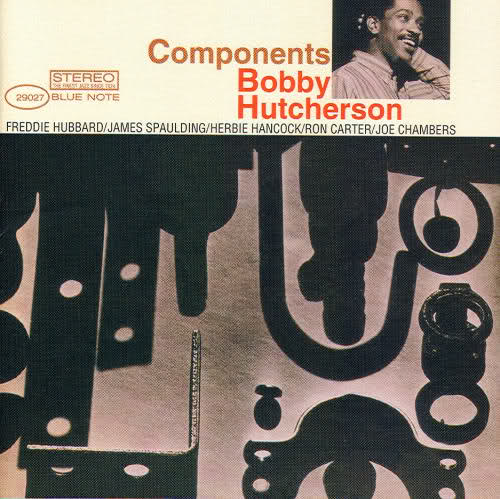
Bobby Hutcherson - Components (1965)

Perhaps the single album that best sums up Bobby Hutcherson's early musical personality, Components is appropriately split into two very distinct halves. The first features four Hutcherson originals in a melodic but still advanced hard bop style, while the latter half has four free-leaning avant-garde pieces by drummer Joe Chambers. Hutcherson allots himself more solo space than on Dialogue, but that's no knock on the excellent supporting cast, which includes Herbie Hancock on piano, James Spaulding on alto sax and flute, Freddie Hubbard on trumpet, and Ron Carter on bass. It's just more Hutcherson's date, and he helps unite the disparate halves with a cool-toned control that's apparent regardless of whether the material is way outside or more conventionally swinging. In the latter case, Hutcherson's originals are fairly diverse, encompassing rhythmically complex hard bop (the title track), pensive balladry ("Tranquillity," which features a lovely solo by Hancock), down-and-dirty swing ("West 22nd Street Theme"), and the gaily innocent "Little B's Poem," which went on to become one of Hutcherson's signature tunes and contains some lyrical flute work from Spaulding. The Chambers pieces tend to be deliberate explorations that emphasize texture and group interaction in the manner of Dialogue, except that there's even more freedom in terms of both structure and tonal center. (The exception is the brief but beautiful closing number, "Pastoral," an accurate title if ever there was one.) Components illustrated that Hutcherson was not only the most adventurous vibes player on the scene, but that he was also capable of playing more straightforward music with intelligence and feeling.
by Steve Huey in All Music Guide

Styles:
Modal
Post-Bop

Tracks:
01 - Components (06:23)
02 - Tranquility (05:01)
03 - Little B's Poem (05:08)
04 - West 22nd Street Theme (04:42)
05 - Movement (07:29)
06 - Juba Dance (05:21)
07 - Air (04:45)
08 - Pastoral (02:02)

Line-up:
Bobby Hutcherson: vibraphone
Joe Chambers: drums
Herbie Hancock: piano
James Spaulding: alto saxophone, flute
Freddie Hubbard: trumpet
Ron Carter: bass

segunda-feira, 15 de novembro de 2010

Sam Rivers - Fuchsia Swing Song (1964)

Recorded in 1964 immediately after leaving the Miles Davis Quintet, Sam Rivers' Fuchsia Swing Song is one of the more auspicious debuts the label released in the mid-'60s. Rivers was a seasoned session player (his excellent work on Larry Young's Into Somethin' is a case in point) and a former member of Herb Pomeroy's Big Band before he went out with Davis. By the time of his debut, Rivers had been deep under the influence of Coltrane and Coleman, but wasn't willing to give up the blues just yet. Hence the sound on Fuchsia Swing Song is one of an artist who is at once very self-assured, and in transition. Using a rhythm section that included Tony Williams (whose Life Time he had guested on), pianist Jaki Byard, and bassist Ron Carter, Rivers took the hard bop and blues of his roots and poured them through the avant-garde colander. Today, players like Joshua Redman, Branford Marsalis, and James Carter do it all the time, but in 1964 it was unheard of. You either played hard bop or free; Davis' entire modal thing hadn't even completely blasted off yet. The title and opening track is a case in point. Rivers opens with an angular figure that is quickly translated by the band into sweeping, bopping blues. Rivers legato is lightning quick and his phrasing touches upon Coleman Hawkins, Sonny Rollins, Coleman, and Coltrane, but his embouchure is all his. He strikes the balance and then takes off on both sides of the aisle. Byard's comping is actually far more than that, building in rhythmic figures in striated minors just behind the tenor. "Downstairs Blues Upstairs" sounds, initially anyway, like it might have come out of the Davis book so deep is its blue root. But courtesy of Byard and Williams, Rivers goes to the left after only four choruses, moving onto the ledge a bit at a time, running knotty arpeggios through the center of the melody and increasingly bending his notes into succeeding intervals while shifting keys and times signatures. He never goes completely over the edge as he would on his later Blue Note dates. The most difficult cut on the date is "Luminous Monolith," with its swing-like figure introducing the melody. Eight bars in, the syncopation of the rhythm sections begins a stutter stem around the time and then the harmony with Byard building dense chords for Rivers to jump off of. On the Connoisseur Series CD (shame on Blue Note once again for making some of its best outside records "limited editions"; titles like this should be as readily available as Horace Silver's Song for My Father, but the label had been playing it ever so safe for a while and making fans buy the limited number of titles over and again) there are alternate takes of "Luminous Monolith" and three more of "Downstairs Blues Upstairs," making it a very worthwhile look at the entire session. This is a highly recommended date. Rivers never played quite like this again.
by Thom Jurek in All Music Guide


Styles:
Post-Bop
Avant-Garde

Tracks:
01 - Fuchsia Swing Song (06:03)
02 - Downstairs Blues Upstairs (05:32)
03 - Cyclic Episode (06:57)
04 - Luminous Monolith (06:31)
05 - Beatrice (06:11)
06 - Ellipsis (07:41)

Line-up:
Sam Rivers - Tenor Saxophone
Ron Carter - Bass
Anthony Williams - Drums
Jaki Byard - Piano

sexta-feira, 12 de novembro de 2010

Freddie Hubbard - First Light (1971)

Never one to take lyricism for granted, trumpeter and composer Freddie Hubbard entered Creed Taylor's studio for the third time in 1971 with the express purpose of making a record radically different from anything he'd cut before; he was looking for it to use electricity and to be out of the soul-jazz mold, but was also more ambitious and wanted to push that envelope and himself. Taylor and Hubbard assembled a band that included Herbie Hancock on Rhodes, guitarists Eric Gale and George Benson, bassist Ron Carter, Jack DeJohnette on drums, Airto Moreira on percussion, and Richard Wyands on acoustic piano to back him. The band was also supported by the truly ethereal and adventurous string arrangements of Don Sebesky (a first for Hubbard). The result is a masterpiece of textured sound, gorgeously far-flung charts, sweet, tight grooves, a subtle mystic feel, and some of Hubbard's most exciting playing ever. The title track and Hubbard's ingenious read of Paul and Linda McCartney's "Uncle Albert/ Admiral Halsey," as well as Leonard Bernstein's "Lonely Town," are so in the pocket that they bleed soul. Benson's uncharacteristically edgy guitar playing juxtaposed against Hubbard's warm tone, and Hancock's beautifully modal Rhodes lines that are drenched with big, open, minor chord voicings, are simply made more illustrious and graceful by Sebesky's strings. While Red Clay and Straight Life are both fine albums, First Light is the one that connects on all levels -- and it did with the jazz-buying public as well. A masterpiece.
by Thom Jurek in All Music Guide

Style:
Fusion

Tracks:
01 First Light (11:05)
02 Uncle Albert/Admiral Halsey (8:17)
03 Moment to Moment (5:43)
04 Yesterday's Dreams (3:55)
05 Lonely Town [from On the Town] (7:00)
06 Fantasy in D (6:55)
07 First Light [alternate take] (16:04)

Line-up:
Freddie Hubbard - trumpet
Joe Henderson - tenor saxophone
Herbie Hancock - Fender Rhodes piano
Richard Wyands - piano
Ron Carter - bass
Jack DeJohnette - drums
Eric Gale - guitar
George Benson - guitar
Airto Moreira - percussion
Don Sebesky - string arrangements

sábado, 18 de setembro de 2010

Alice Coltrane - Ptah the El Daoud (1970)

Sometimes written off as an also-ran to her more famous husband, Alice Coltrane's work of the late '60s and early '70s shows that she was a strong composer and performer in her own right, with a unique ability to impregnate her music with spirituality and gentleness without losing its edges or depth. Ptah the El Daoud is a truly great album, and listeners who surrender themselves to it emerge on the other side of its 46 minutes transformed. From the purifying catharsis of the first moments of the title track to the last moments of "Mantra," with its disjointed piano dance and passionate ribbons of tenor cast out into the universe, the album resonates with beauty, clarity, and emotion. Coltrane's piano solo on "Turiya and Ramakrishna" is a lush, melancholy, soothing blues, punctuated only by hushed bells and the sandy whisper of Ben Riley's drums and later exchanged for an equally emotive solo by bassist Ron Carter. "Blue Nile" is a case where the whole is greater than the sum of its parts; Coltrane's sweeping flourishes on the harp nestle in perfectly with flute solos by Pharoah Sanders and Joe Henderson to produce a warm cocoon of sound that is colored by evocations of water, greenness, and birds. Perhaps as strong as the writing here, though, are the performances that Coltrane coaxes from her sidemen, especially the horn players. Joe Henderson, who can always be counted on for technical excellence, gives a performance that is simply on a whole other level from much of his other work -- freer, more open, and more fluid here than nearly anywhere else. Pharoah Sanders, who at times with John Coltrane seemed like a magnetic force of entropy, pulling him toward increasing levels of chaos, shows all of the innovation and spiritual energy here that he is known for, with none of the screeching. Overlooked and buried for years in obscurity, this album deserves to be embraced for the gem it is.
by Stacia Proefrock in All Music Guide

Styles:
Post-Bop
Avant-Garde
Free-Jazz

Tracks:
01 - Ptah, the El Daoud (14:00)
02 - Turiya and Ramakrishna (08:21)
03 - Blue Nile (07:05)
04 - Mantra (16:35)

Line-up:
Alice Coltrane — harp, piano
Joe Henderson — alto flute, tenor saxophone
Pharoah Sanders — alto flute, tenor saxophone, bells
Ron Carter — bass
Ben Riley — drums

quarta-feira, 1 de setembro de 2010

Herbie Hancock - Maiden Voyage (1965)

Less overtly adventurous than its predecessor, Empyrean Isles, Maiden Voyage nevertheless finds Herbie Hancock at a creative peak. In fact, it's arguably his finest record of the '60s, reaching a perfect balance between accessible, lyrical jazz and chance-taking hard bop. By this point, the pianist had been with Miles Davis for two years, and it's clear that Miles' subdued yet challenging modal experiments had been fully integrated by Hancock. Not only that, but through Davis, Hancock became part of the exceptional rhythm section of bassist Ron Carter and drummer Tony Williams, who are both featured on Maiden Voyage, along with trumpeter Freddie Hubbard and tenor saxophonist George Coleman. The quintet plays a selection of five Hancock originals, many of which are simply superb showcases for the group's provocative, unpredictable solos, tonal textures, and harmonies. While the quintet takes risks, the music is lovely and accessible, thanks to Hancock's understated, melodic compositions and the tasteful group interplay. All of the elements blend together to make Maiden Voyage a shimmering, beautiful album that captures Hancock at his finest as a leader, soloist, and composer.
by Stephen Thomas Erlewine in All Music Guide

Styles:
Hard-Bop
Modal

Tracks:
01 - Maiden Voyage (7:53)
02 - The Eye of the Hurricane (5:57)
03 - Little One (8:43)
04 - Survival of the Fittest (9:59)
05 - Dolphin Dance (9:16)

Line-up:
Herbie Hancock — Piano
Freddie Hubbard — Trumpet
George Coleman — Tenor saxophone
Ron Carter — Bass
Tony Williams — drums

terça-feira, 10 de agosto de 2010

Eric Dolphy - Out There (1960)

The follow-up album to Outward Bound, Eric Dolphy's second effort for the Prestige/New Jazz label (and later remastered by Rudy Van Gelder) was equally praised and vilified for many reasons. At a time when the "anti-jazz" tag was being tossed around, Dolphy's nonlinear, harshly harmonic music gave some critics grist for the grinding mill. A second or third listen to Dolphy's music reveals an unrepentant shadowy side, but also depth and purpose that were unprecedented and remain singularly unique. The usage of bassist George Duvivier and cellist Ron Carter (an idea borrowed from Dolphy's days with Chico Hamilton) gives the music its overcast color base, in many ways equally stunning and uninviting. Dolphy's ideas must be fully embraced, taken to heart, and accepted before listening. The music reveals the depth of his thought processes while also expressing his bare-bones sensitive and kind nature. The bluesy "Serene," led by Carter alongside Dolphy's bass clarinet, and the wondrous ballad "Sketch of Melba" provide the sweetest moments, the latter tune identified by the fluttery introspective flute of the leader, clearly indicating where latter-period musicians like James Newton initially heard what would form their concept. Three pieces owe alms to Charles Mingus: his dark, moody, doleful, melodic, and reluctant composition "Eclipse"; the co-written (with Dolphy) craggy and scattered title track featuring Dolphy's emblematic alto held together by the unflappable swing of drummer Roy Haynes; and "The Baron," the leader's dark and dirty, wise and willful tribute to his former boss, accented by a choppy and chatty solo from Carter. "17 West," almost a post-bop standard, is briefly tonal with a patented flute solo and questioning cello inserts, while the unexpected closer written by Hale Smith, "Feathers," is a haunting, soulful ballad of regret where Dolphy's alto is more immediately heard in the foreground. A somber and unusual album by the standards of any style of music, Out There explores Dolphy's vision in approaching the concept of tonality in a way few others -- before, concurrent, or after -- have ever envisioned.
by Michael G. Nastos in All Music Guide

Styles:
Avant-Garde
Post-Bop

Tracks:
01 - Out There (6:55)
02 - Serene (7:01)
03 - The Baron (2:57)
04 - Eclipse (2:45)
05 - 17 West (4:50)
06 - Sketch of Melba (4:40)
07 - Feathers (5:00)

Line-up:
Eric Dolphy — flute, bass clarinet, alto saxophone
Ron Carter — bass, cello
George Duvivier — bass
Roy Haynes — drums

sexta-feira, 6 de agosto de 2010

Wayne Shorter - Speak no Evil (1965)

On his third date for Blue Note within a year, Wayne Shorter changed the bands that played on both Night Dreamer and Juju and came up with not only another winner, but also managed to give critics and jazz fans a different look at him as a saxophonist. Because of his previous associations with McCoy Tyner, Elvin Jones, and Reggie Workman on those recordings, Shorter had been unfairly branded with the "just-another-Coltrane-disciple" tag, despite his highly original and unusual compositions. Here, with only Jones remaining and his bandmates from the Miles Davis Quintet, Herbie Hancock and Ron Carter on board (with Freddie Hubbard filling out the horn section), Shorter at last came into his own and caused a major reappraisal of his earlier work. The odd harmonic frameworks used to erect "Fee-Fi-Fo-Fum," with its balladic structure augmented with a bluesy regimen of hard bop and open-toned modalism, create the illusion of a much larger band managing all that timbral space. Likewise on the title track, with its post-bop-oriented melodic line strewn across a wide chromatic palette of minors and Hancock's piano pushing through a contrapuntal set of semi-quavers, the avant-garde meets the hard bop of the '50s head on and everybody wins. The loping lyric of the horns and Hancock's vamping in the middle section during Shorter's solo reveals a broad sense of humor in the saxophonist's linguistics and a deep, more regimented sense of time and thematic coloration. The set ends with the beautiful "Wild Flower," a lilting ballad with angular accents by Hancock who takes the lyric and inverts it, finding a chromatic counterpoint that segues into the front line instead of playing in opposition. The swing is gentle but pronounced and full of Shorter's singular lyricism as a saxophonist as well as a composer. [The CD reissue adds a fine alternate take of "Dance Cadaverous."]
by Thom Jurek in All Music Guide

Styles:
Hard-Bop

Tracks:
01 - Witch Hunt (8:07)
02 - Fee-Fi-Fo-Fum (5:50)
03 - Dance Cadaverous (6:45)
04 - Speak No Evil (8:23)
05 - Infant Eyes (6:51)
06 - Wild Flower (6.00)
07 - Dance Cadaverous (alternate take) (6:35)

Line-up:
Wayne Shorter — tenor saxophone
Freddie Hubbard — trumpet
Herbie Hancock — piano
Ron Carter — bass
Elvin Jones — drums

sábado, 19 de junho de 2010

Miles Davis - Nefertiti (1967)

Nefertiti, the fourth album by Miles Davis' second classic quintet, continues the forward motion of Sorcerer, as the group settles into a low-key, exploratory groove, offering music with recognizable themes -- but themes that were deliberately dissonant, slightly unsettling even as they burrowed their way into the consciousness. In a sense, this is mood music, since, like on much of Sorcerer, the individual parts mesh in unpredictable ways, creating evocative, floating soundscapes. This music anticipates the free-fall, impressionistic work of In a Silent Way, yet it remains rooted in hard bop, particularly when the tempo is a bit sprightly, as on "Hand Jive." Yet even when the instrumentalists and soloists are placed in the foreground -- such as Miles' extended opening solo on "Madness" or Hancock's long solo toward the end of the piece -- this never feels like showcases for virtuosity, the way some showboating hard bop can, though each player shines. What's impressive, like on all of this quintet's sessions, is the interplay, how the musicians follow an unpredictable path as a unit, turning in music that is always searching, always provocative, and never boring. Perhaps Nefertiti's charms are a little more subtle than those of its predecessors, but that makes it intriguing. Besides, this album so clearly points the way to fusion, while remaining acoustic, that it may force listeners on either side of the fence into another direction.
by Stephen Thomas Erlewine in All Music Guide

Styles:
Hard-Bop
Post-Bop
Modern Creative
Modal

Tracks:
01 - Nefertiti (7:52)
02 - Fall (6:39)
03 - Hand Jive (8:54)
04 - Madness (7:31)
05 - Riot (3:05)
06 - Pinocchio (5:08)
07 - Hand Jive [First Alternate Take] (6:45)
08 - Hand Jive [Second Alternate Take] (8:17)
09 - Madness (6:40)
10 - Pinocchio (5:05)

Line-up:
Miles Davis - trumpet
Wayne Shorter - tenor saxophone
Herbie Hancock - piano
Ron Carter - double bass
Tony Williams - drums

sexta-feira, 14 de maio de 2010

Miles Davis Quintet - Live in Milan (1964)


Tracks:
01 - Autumn Leaves
02 - My Funny Valentine
03 - All Blue
04 - All of You
05 - Joshua - into - The Theme

Line-up:
Miles Davis - trumpet
Wayne Shorter - tenor sax
Herbie Hancock - piano
Ron Carter - bass
Tony Williams - drums

quinta-feira, 29 de abril de 2010

Pharoah Sanders - Karma (1969)

John Coltrane left behind a legacy of experimental and extremely spiritual work whose timeless quality still reverberates today. After his untimely death many poseurs came out to stake their claim as the next Coltrane. Many tried and many failed. Then in 1969 a former sideman of Coltrane's, Pharoah Sanders, stepped out from the shadow of his mentor and recorded Karma, which bore the soul of Coltrane's musical and spiritual passion.
Karma was released four years after his first record as a leader, Pharoah's First (1965). While working with Coltrane, Sanders began to develop an aggressive tone that ripped into an anarchaotic passion owing as much to Coltrane as Albert Ayler. His records as a leader did not always reflect the raw energy that would show up on Coltrane classics such as Ascension. His 1966 Impulse! debut, Tauhid, is a great example of this. Sanders let the work take on a generalized groove that worked with the mood created in each piece. In doing so, he created not only his best pre-Karma record, but one of his finest overall. After Coltrane's death, Pharoah worked with his widow Alice before setting to work on what would become Karma.
As with many records of the mid to late-'60s/early '70s, Karma is based primarily around the first of two album tracks, "The Creator Has a Master Plan." The track is one of the finest and best-executed and edited jams ever caught on record, though many critics would and will argue with that statement. The master plan of tracks on contemporaneous Miles Davis records like In a Silent Way or Bitches Brew was created by the editing and production efforts of Teo Maceo. Recordings like Free Jazz or Ascension, in contrast, worked by virtue of the way they tore down sonic and musical boundaries. Sanders incorporates these values into "The Creator," making it more than just a loose jam; no matter where Sanders goes, he is in total control. Even as the piece peaks into volatile eruptions roughly sixteen minutes in, he saddles the passion and works the track back into the initial groove that was comprised its first movement.
"Creator" comes in at 32:47 and wastes not a single note. Opening with a virtual rush of sound, it then quiets down and drops a brief riff from A Love Supreme. The tune then works itself into a groove that would later be known as acid jazz, working with Eastern percussion and allowing the bass to float close to the front of the mix. This first section relies on a modal two-chord structure that keeps the tone bouncy and meditative. At eight minutes Leon Thomas begins a chant-like vocal that varies lines from the mantra "The creator has a master plan, peace and love for every man." The vocals drop and the third movement becomes an unrelenting Coltranesque blitz that tears the mellow mood apart, only to combine the angst and mellowness in the next movement and settle back into a reprise of the first fourteen minutes.
"Colors," on the other hand, is a shorter and more structured piece that features some solid and well-executed chops. Again Leon Thomas sings, and Ron Carter takes over the duties of Richard Davis and Reggie Workman.
Love or hate the music of Pharoah Sanders, you cannot deny the man's vision after hearing this record. His is an absolute genius approach to arrangement and performance. Though Sanders would release many great records and even mellow his distinctive tenor sound down, Karma is a record that deserves to be heard by any serious jazz fan.
by Trevor McLaren in All About Jazz

Styles:
Progressive Jazz
Modal
Post-bop
Avant-Garde
Free-Jazz

Tracks:
01 - The Creator Has a Master Plan (32:47)
02 - Colors (05:36)

Line-up:
Pharoah Sanders - Sax (Tenor)
Leon Thomas - Percussion / Vocals
Julius Watkins - French Horn
James Spaulding - Flute (on track 1)
Lonnie Liston Smith - Piano
Reggie Workman - Bass
Richard Davis - Bass (on track 1)
Ron Carter - Bass (on track 2)
Billy Hart - Drums (on track 1)
Freddie Waits - Drums (on track 2)
Nathaniel Bettis - Percussion (on track 1)
Leon Thomas - Vocals

domingo, 18 de abril de 2010

McCoy Tyner - The Real McCoy (1967)

Two and a half years after his last recording as a leader for Impulse, pianist McCoy Tyner emerged to start a period on Blue Note that would result in seven albums. Having left John Coltrane's Quartet in late 1965, Tyner was entering a period of struggle, although artistically his playing grew quite a bit in the late '60s. For this release, the pianist is teamed with tenor saxophonist Joe Henderson, bassist Ron Carter, and drummer Elvin Jones for five of his originals. Highlights of the easily recommended album include "Passion Dance," "Four by Five," and "Blues on the Corner."
by Scott Yanow in All Music Guide

Styles:
Post-Bop

Tracks:
01 - Passion Dance (8:44)
02 - Contemplation (9:10)
03 - Four by Five (6:33)
04 - Search for Peace (6:27)
05 - Blues on the Corner (5:58)

Line-up:
McCoy Tyner: piano
Joe Henderson: tenor saxophone
Ron Carter: bass
Elvin Jones: drums

terça-feira, 6 de abril de 2010

Miles Davis Quintet - Miles in Tokyo (1964)

Miles Davis's most successful groups--his first great quintet with John Coltrane, for example, and his mid-1960s outfit with saxophonist Wayne Shorter--are well known, but the ensembles in-between are also notable. On this 1964 concert, recorded in Tokyo, Japan, Miles was already working with the rhythm section he would maintain until 1970--drummer Tony Williams, bassist Ron Carter, and pianist Herbie Hancock. The saxophonist, remarkably enough, is subsequent avant-garde legend Sam Rivers.
Rivers is a unique and under-appreciated player not bound by stylistic constraints; he plays with great verve, humor, and invention. Though Rivers seems a bit out of place on this set of mostly standards (which includes "My Funny Valentine" and "All of You"), it is interesting to hear how his sound changes the group, pushing it toward more flexible rhythmic and harmonic structures. "So What," for example, grows to skittering near-cacophony, with a series of complex solos. Hancock's blinding right hand and the propulsive rhythms of Carter and Williams also drive Davis to some of the edgiest playing of his career at that point. Miles in Tokyo is a fascinating document of Davis in transition, but is also worth picking up for the chance to hear Rivers in such unique company.
After George Coleman left the Miles Davis Quintet, tenor saxophonist Sam Rivers took his place for a short period including a tour of Japan. Davis did not care for Rivers' avant-garde style (they failed to develop any chemistry) and soon replaced him, but this live LP (originally only issued in Japan) survived to document this brief association. The music (five lengthy versions of standards) is actually of high quality, with both Davis and Rivers in fine form and the young rhythm section (pianist Herbie Hancock, bassist Ron Carter, and drummer Tony Williams) pushing the trumpeter/leader to open up his style.

Styles:
Post-bop
Modal Music

Tracks:
01 - Introduction by Teruo Isono (01:10)
02 - If I Were a Bell (10:17)
03 - My Funny Valentine (12:50)
04 - So What (08:05)
05 - Walkin' (09:15)
06 - All of You (11:18)
07 - Go-Go (01:21)

Line-Up:
Miles Davis - trumpet, tenor saxophone
Sam Rivers - tenor saxophone
Ron Carter - bass instrument
Tony Williams - drums
Herbie Hancock - piano

sexta-feira, 7 de agosto de 2009

Herbie Hancock - Empyrean Isles (1964)

My Point of View and Inventions and Dimensions found Herbie Hancock exploring the fringes of hard bop, working with a big band and a Latin-flavored percussion section, respectively. On Empyrean Isles, he returns to hard bop, but the results are anything but conventional. Working with cornetist Freddie Hubbard, bassist Ron Carter, and drummer Tony Williams -- a trio just as young and adventurous as he was -- Hancock pushes at the borders of hard bop, finding a brilliantly evocative balance between traditional bop, soul-injected grooves, and experimental, post-modal jazz. Hancock's four original concepts are loosely based on the myths of the Empyrean Isles, and they are designed to push the limits of the band and of hard bop. Even "Cantaloupe Island," well-known for its funky piano riff, takes chances and doesn't just ride the groove. "The Egg," with its minimal melody and extended solo improvisations, is the riskiest number on the record, but it works because each musician spins inventive, challenging solos that defy convention. In comparison, "One Finger Snap" and "Oliloqui Valley" (alternate takes of both tracks are included as bonuses on the CD reissue) adhere to hard bop conventions, but each song finds the quartet vigorously searching for new sonic territory with convincing fire. That passion informs all of Empyrean Isles, a record that officially established Hancock as a major artist in his own right.
by Stephen Thomas Erlewine at All Music Guide.

Styles:

Modal Music
Hard Bop

Tracks:
01 One Finger Snap
02 Oliloqui Valley
03 Cantaloupe Island
04 The Egg
05 One Finger Snap (alternate take)
06 Oliloqui Valley (alternate take)


Line-up:

Herbie Hancock - piano
Freddie Hubbard - cornet / flugelhorn
Ron Carter - bass
Tony Williams - drums

domingo, 19 de julho de 2009

Paul Desmond - Skylark (1973)

Moving over to the CTI label with Creed Taylor, Paul Desmond injects a bit of the 1970s into his sound, obtaining agreeable if not totally simpatico results. Here, the cool altoist is teamed with the progressive-slanted drumming of Jack DeJohnette (who might have been too busy a drummer for his taste), and Bob James' electric and acoustic pianos, with Ron Carter as the bass anchor, Gene Bertoncini on rhythm guitar, and, most interestingly, another individualist, Gabor Szabo, on solo electric guitar. For the first and only time, even taking into account the most inspired moments of Jim Hall, Desmond is not the most interesting soloist on his own record, for it is Szabo who most consistently draws you in with his mesmerizing incantations over vamps from the rhythm section. For those who missed it the first time, Desmond remakes "Take Ten" -- without the Middle Eastern elements -- "Romance de Amor" is eventually dominated by Szabo, and the inclusion of "Was a Sunny Day" proves that Desmond's involvement with the music of Paul Simon in 1970 was not a passing infatuation. Don Sebesky is credited with the "arrangements" but his orchestrating hand is not felt except for a single solo cello (George Ricci) in an adaptation of Purcell ("Music for a While"). It's a cautious change of pace for Desmond, although the fiercer context into which he was placed doesn't really fire his imagination.
by Richard S. Ginell at All Music Guide.

Styles:

Cool
Easy Pop
Ballads
Bossa Nova

Tracks:

01 Take Ten
02 Romance de Amor
03 Was a Sunny Day
04 Music for a While
05 Skylark
06 Indian Summer

Line-up:

Paul Desmond - alto saxophone
Gabor Szabo - guitar (soloist)
Gene Bertoncini - guitar
Ron Carter - bass
Jack DeJohnette - drums
Bob James - piano / electric piano
Hilary James - piano / electric piano
Ralph MacDonald - percussion
George Ricci - cello

segunda-feira, 13 de julho de 2009

Miles Davis - Miles in Berlim (1964)

Recorded live in Germany at the Berlin Philharmonic, Miles in Berlin represents the first recording of trumpeter Miles Davis with tenor saxophonist Wayne Shorter. For various reasons, saxophonists George Coleman and Sam Rivers had both come and gone as members of Davis' band. With the addition of Shorter in 1964, Davis had found the lineup of musicians that he would stick with until 1968 and produce some of the most influential albums of his career -- collected on The Miles Davis Quintet, 1965-68: The Complete Columbia Studio. Eventually known as the "second great quintet," most of the players here, including pianist Herbie Hancock, bassist Ron Carter, and drummer Tony Williams, had been with Davis for just under a year. In that time, they had taken his traditional repertoire of standards and originals and reworked them with a more adventurous, edgy approach that flirted with the avant-garde. While there isn't a huge difference in the sound of this band or choice of songs from the group that recorded Seven Steps to Heaven or Miles Davis in Europe, there is a palpable sense of creative abandon in Davis' performance as well as synergy to the group sound that seems to foreshadow the innovative music to come.
by Matt Collar at All Music Guide.

Styles:

Avant-Garde
Hard Bop
Modal Music

Tracks:

01 Milestones
02 Autumn Leaves
03 So What
04 Walkin'
05 Theme

Line-up:

Ron Carter - bass
Miles Davis - trumpet
Herbie Hancock - piano
Wayne Shorter - tenor saxophone
Tony Williams - drums

domingo, 12 de julho de 2009

Miles Davis - Filles de Kilimanjaro (1968)

Since it's billed as "Directions in Music by Miles Davis," it should come as little surprise that Filles de Kilimanjaro is the beginning of a new phase for Miles, the place that he begins to dive headfirst into jazz-rock fusion. It also happens to be the swan song for his second classic quintet, arguably the finest collective of musicians he ever worked with, and what makes this album so fascinating is that it's possible to hear the breaking point — though his quintet all followed him into fusion (three of his supporting players were on In a Silent Way), it's possible to hear them all break with the conventional notions of what constituted even adventurous jazz, turning into something new. According to Miles, the change in "direction" was as much inspired by a desire to return to something earthy and bluesy as it was to find new musical territory, and Filles de Kilimanjaro bears him out. Though the album sports inexplicable, rather ridiculous French song titles, this is music that is unpretentiously adventurous, grounded in driving, mildly funky rhythms and bluesy growls from Miles, graced with weird, colorful flourishes from the band. Where Miles in the Sky meandered a bit, this is considerably more focused, even on the three songs that run over ten minutes, yet it still feels transitional. Not tentative (which In the Sky was), but certainly the music that would spring full bloom on In a Silent Way was still in the gestation phase, and despite the rock-blues-n-funk touches here, the music doesn't fly and search the way that Nefertiti did. But that's not a bad thing — this middle ground between the adventurous bop of the mid-'60s and the fusion of the late '60s is rewarding in its own right, since it's possible to hear great musicians find the foundation of a new form. For that alone, Filles de Kilimanjaro is necessary listening.
by Stephen Thomas Erlewine at All Music Guide.

Styles:

Post-Bop
Fusion

Tracks:

01 Frelon Brun (Brown Hornet)
02 Tout de Suite
03 Petits Machins (Little Stuff)
04 Filles de Kilimanjaro
05 Mademoiselle Mabry (Miss Mabry)

Line-up:

Ron Carter - bass (tracks 2-4 & 6)
Chick Corea - piano / electric piano (tracks 1 & 5)
Miles Davis - trumpet
Herbie Hancock - piano / electric piano (tracks 2-4 & 6)
Dave Holland - bass (tracks 1 & 5)
Wayne Shorter - tenor saxophone
Tony Williams - drums