quinta-feira, 18 de março de 2010

Masayuki Takayanagi and New Century Music Institute - Ginparis Session (1963)

This is one of the earliest live recordings by Japanese jazz musicians, made when the country's jazz industry was in its infancy and there were no real jazz clubs. The leader and guitarist Masayuki Takayanagi and young members of the ambitiously named New Century Music Institute came together on one special night in 1963. Privately recorded on tape by one of the supporters, future jazz stars such as Masahiko Togashi, Yosuke Yamashita and Terumasa Hino play inspired solo after another, the combined effect of which is electrifying. Breaking out from the molds of swing and bebop, the sound they created was very progressive.

Style:
Bebop
Avant-Garde

Tracks:
01 - Greensleeves [traditional] (17:59)
02 - Nardis [Miles Davis] (11:08)
03 - If I Were a Bell [Loesser] (12:35)
04 - Obstruction [Hideto Kanai] (11:45)

Line-up:
Masayuki Takayanagi - guitar (1)
Hideto Kanai - bass (1, 2, 4)
Kunimitsu Inaba - bass (1, 3)
Masahiko Togashi - drums (1, 2, 4)
Masabumi Kikuchi - piano (2)
Sadanori Nakamure - guitar (3)
Terumasa Hino - trumpet (3)
Hiroshi Yamazaki - drums (3)
Yosuke Yamashita - piano (4)
Kyohei Uyama - guitar (4)

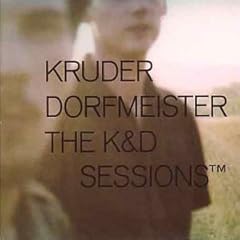
Kruder & Dorfmeister - The K&D Sessions (1998)


The easy way out (of remixing) is to produce a track that sounds nothing like the original whatsoever. This may well produce something musically more rewarding, but it’s missing the real point of remixing - and that’s bringing something new to a track without destroying what’s there in the first place. Cue Kruder and Dorfmeister, two DJs from Vienna who’ve quietly produced some of the most stunning and startling remixes in the last five years and made it their trademark to leave the spirit of a track intact while twisting it into something utterly different.

As you’d expect from a record on a label called G-Stoned, the overall atmosphere of The K&D Sessions is laid back - you won’t hear any screeching 303s or encounter superfast bpms here. Instead, there are beautifully precise drums and sublimely warm deep bass lines which create their own distinct sound without becoming repetitious. Add their ear for dropping just enough melody over the top to create a simple but opulent sound, and you have music that makes 3 in the morning a wonderful place to be. If you really want a half-arsed "sounds-a-bit-like" reference, then it would have to be David Holmes, but the comparison doesn’t do either parties justice.

K&D are also refreshingly fond of keeping vocal tracks almost intact, rather than obliterating them completely. Nowhere does this stand out more than their sublimely moody mix of Depeche Mode’s "Useless", where Dave Gahan’s weary voice is given centre stage over nothing besides pared down bass and is all the more powerful for it. Not that K&D are techno-angst merchants, producing beautiful but chilly soundscapes in their bedrooms - their sound is organic, elegant, eclectic and endlessly inventive.

, review by Chris Mitchell @ Spike Magazine

. discogs

CD 1
1. Roni Size - "Heroes (Kruder's Long Loose Bossa remixed by Peter Kruder)" – 6:30
2. Alex Reece - "Jazz Master (K&D Session)" – 8:20
3. Count Basic - "Speechless (Drum 'n' Bass remixed by Peter Kruder)" – 6:37
4. Rockers Hi-Fi - "Going Under (K&D Session)" – 8:37
5. Bomb The Bass - "Bug Powder Dust (K&D Session)" – 7:20
6. Aphrodelics - "Rollin' On Chrome (Wild Motherfucker Dub remixed by Richard Dorfmeister)" – 5:39
7. Depeche Mode - "Useless (K&D Session)" – 6:13
8. Count Basic - "Gotta Jazz (remixed by Richard Dorfmeister)" – 5:32
9. Rainer Trüby Trio - "Donaueschingen (Peter Kruder's Donaudampfschifffahrtsgesellschaftskapitänskajütenremix)" – 6:55
10. Lamb - "Trans Fatty Acid (K&D Session)" – 8:33

CD 2
1. David Holmes - "Gone (K&D Session)" – 8:29
2. Sofa Surfers - "Sofa Rockers (Richard Dorfmeister Remix)" – 4:30
3. Mama Oliver - "Eastwest (Stoned Together resmoked by Richard Dorfmeister)" – 5:11
4. Bomb The Bass - "Bug Powder Dust (Dub remixed by Kruder & Dorfmeister)" – 6:20
5. Kruder & Dorfmeister - "Boogie Woogie" – 3:20
6. Sin - "Where Shall I Turn (K&D Session Vol.2)" – 5:53
7. Bone Thugs-n-Harmony - "1st Of Tha Month (K&D Session)" – 5:49
8. Kruder & Dorfmeister - "Lexicon" – 1:06
9. Knowtoryous - "Bomberclaad Joint (K&D Session)" – 3:47
10. Rockers Hi-Fi - "Going Under (Evil Love and Insanity Dub remixed by Kruder & Dorfmeister)" – 4:30
11. Strange Cargo - "Million Town (K&D Session)" – 7:32


Hosted by imgur.com

domingo, 7 de março de 2010

Jean-Luc Ponty - Enigmatic Ocean (1977)

Consistently imaginative, Enigmatic Ocean is one of Jean-Luc Ponty's finest accomplishments. The French violinist recorded his share of fusion gems during the 1970s, and this album is at the top of the list. Often aggressive but sometimes reflective and moody, this CD is as unpredictable as it is adventurous. Ponty has plenty of room to stretch out, let loose, and blow, and electric guitarists Allan Holdsworth and Daryl Stuermer contribute some inspired solos as well. Also quite impressive is the insightful and passionate drumming of Steve Smith, who went on to lead the superb fusion band Vital Information. Ponty takes one risk after another, and all of them pay off beautifully.
by Alex Henderson at All Music Guide

Style:
Fusion

Tracks:
01 Overture
02 The Trans-Love Express
03 Mirage
04 Enigmatic Ocean, Part 1
05 Enigmatic Ocean, Part 2
06 Enigmatic Ocean, Part 3
07 Enigmatic Ocean, Part 4
08 Nostalgic Lady
09 The Struggle of the Turtle to the Sea, Part 1
10 The Struggle of the Turtle to the Sea, Part 2
11 The Struggle of the Turtle to the Sea, Part 3

Line-up:

Jean-Luc Ponty - piano / keyboards / vocals / bells / violone / violectra
Ralph Armstrong - acoustic and electric bass
Allan Holdsworth - acoustic and electric guitar
Steve Smith - drums
Daryl Stuermer - acoustic, rhythm and electric guitar
Allan Zavod - organ / synthesizer / acoustic and electric piano / keyboards / clavinet

segunda-feira, 22 de fevereiro de 2010

John Coltrane - A Love Supreme (1964)

Easily one of the most important records ever made, John Coltrane's A Love Supreme was his pinnacle studio outing that at once compiled all of his innovations from his past, spoke of his current deep spirituality, and also gave a glimpse into the next two and a half years (sadly, those would be his last). Recorded at the end of 1964, Trane's classic quartet of Elvin Jones, McCoy Tyner, and Jimmy Garrison stepped into the studio and created one of the most thought-provoking, concise, and technically pleasing albums of their bountiful relationship (not to mention his best-selling to date). From the undulatory (and classic) bassline at the intro to the last breathy notes, Trane is at the peak of his logical yet emotionally varied soloing while the rest of the group is remarkably in tune with Coltrane's spiritual vibe. Composed of four parts, each has a thematic progression leading to an understanding of spirituality through meditation. From the beginning, "Acknowledgement" is the awakening of sorts that trails off to the famous chanting of the theme at the end, which yields to the second act, "Resolution," an amazingly beautiful piece about the fury of dedication to a new path of understanding. "Persuance" is a search for that understanding, and "Psalm" is the enlightenment. Although he is at times aggressive and atonal, this isn't Trane at his most adventurous (pretty much everything recorded from here on out progressively becomes much more free, and live recordings from this period are extremely spirited), but it certainly is his best attempt at the realization of concept — as the spiritual journey is made amazingly clear. A Love Supreme clocks in at just over 30 minutes, but if it had been any longer it could have turned into a laborious listen. As it stands, just enough is conveyed. It is almost impossible to imagine a world without A Love Supreme having been made, and it is equally impossible to imagine any jazz collection without it.
by Sam Samuelson at All Music Guide

Styles:
Free Jazz
Avant-Garde
Modal
Post Bop

Tracks:
01 Acknowledgement
02 Resolution
03 Pursuance / Psalm

Line-up:

John Coltrane - tenor saxophone
Jimmy Garrison - double bass
Elvin Jones- drums
McCoy Tyner - piano

quarta-feira, 10 de fevereiro de 2010

Billy Cohbam - Total Eclipse (1974)

This is Billy Cobham's third solo recording under his own name and is a fine follow-up to Crosswinds. The mini-suite "Solarization" not only showcases the band's technical abilities, but also Cobham's strong compositional skills. It also features a schizophrenic piano solo ("Second Phase") from the underrated pianist Milcho Leviev, who sounds like a mutation of Cecil Taylor and Bill Evans. The funky "Moon Germs," on which John Abercrombie is pushed to inspiring new heights, became a Cobham classic. "The Moon Ain't Made of Green Cheese" is a beautiful flugelhorn solo by Randy Brecker backed by Cobham's debut on piano. The band stretches out on the lengthy "Sea of Tranquility," while "Last Frontier" is a gratuitous drum solo. This recording is highly recommended as Cobham still sounds inspired.
by Robert Taylor at All Music Guide

Styles:
Post Bop
Fusion

Tracks:
01 Solarization
02 Lunarputians
03 Total Eclipse
04 Bandits
05 Moon Germs
06 The Moon Ain't Made of Green Cheese
07 Sea of Tranquility
08 Last Frontier

Line-up:

Billy Cobham - drums / piano / tympani
Michael Brecker - flute / soprano and tenor saxophone
Randy Brecker - trumpet / flugelhorn
Glenn Ferris - tenor and bass trombone
Sue Evans - marimba
Milcho Leviev - keyboards
John Abercrombie - guitar
Cornell Dupree - guitar
Alex Blake - electric bass
David Earle Johnson - congas

terça-feira, 9 de fevereiro de 2010

terça-feira, 2 de fevereiro de 2010

Jimmy Smith - The Sermon! (1958)

The seven sides on The Sermon! (1958) come from a pair of studio dates, the first of which was held August 25, 1957 and includes Jimmy Smith (organ), Lee Morgan (trumpet), George Coleman (alto sax), Curtis Fuller (trombone), Eddie McFadden (guitar), Kenny Burrell (guitar) and Donald Bailey (drums). This was followed by a second exactly six months (to the day) later on February 25, 1958. Along with Smith, present and accounted for during the session were Lou Donaldson (alto sax) replacing Coleman in addition to contributions from Tina Brooks (tenor sax) and the ubiquitous Art Blakey (drums). From the '57 confab are the popular music standards "S'Wonderful" and "Blue Room". The former is given an unhurried mid-tempo workout as Morgan banters sublime licks with McFadden. Fuller's full round tones effortlessly manoeuvre "Blue Room" with the intimate trio of Bailey and Smith in support. The real essence can be heard in the variety of styles utilized in the latter gathering. An emotive "Lover Man" is punctuated by Donaldson's fluid leads behind Smith's heartfelt changes. This is sharply distinguished by the longer jams featuring Burrell, Blakey and mighty impressive blows throughout from Morgan and Brooks. They ride hard on the Bird classics "Confirmation" and an intense "Au Privave". Brooks' solos are much of the reason why each excels with such bop finesse and are best experienced rather than simply read about. "Flamingo" is a sumptuous ballad that allows Morgan and Burrell to trade some laid back lines within the context of an unencumbered rhythm section. Whether upgrading the mid ‘80s CD or discovering the platter for the first time, The Sermon! is a prime example of Smith and company's myriad of talents.
by Lindsay Planer at All Music Guide

Style:
Hard Bop
Soul Jazz

Tracks:
01 The Sermon
02 J.O.S.
03 Flamingo

Line-up:

Jimmy Smith - organ
Lee Morgan - trumpet
Lou Donaldson - alto saxophone
George Coleman - alto saxophone
Tina Brooks - tenor saxophone
Kenny Burrell - guitar
Eddie McFadden - guitar
Art Blakey - drums
Donald Bailey - drums